Sidebar

Artificial tissues and organs may replace natural ones, however, we cannot say when it will happen, biochemist Virginija Bukelskienė, doctor of physical sciences, says in the interview. “We will have to wait and work intensively. Especially if we are talking about complex organs”, states the researcher of the Life Sciences Center of Vilnius University.

Today, a memorial plaque was unveiled on the wall of the Ministry of Education, Science and Sport to Jędrzej Śniadecki, a physician and teacher, who was the founder of chemical science in Lithuania. In the building here, he founded and headed the first Department of Chemistry at Vilnius University (VU), from which chemistry as a separate discipline began.

VU Life Sciences Center is launching a new lifelong learning course  "Molecular Medicine".

Personalized or precision medicine fundamentally changes the concept of disease control and brings more and more genetic, genomic, molecular medicine research into clinical practice. The purpose of this advanced training course is to provide doctors and other specialists with the basics of practical work in the molecular research laboratory, to familiarize them with the latest molecular diagnostic methods and their application in clinical practice.

The European Molecular Biology Laboratory (EMBL) Information Day at the Life Sciences Center of Vilnius University introduced Lithuanian scientists to this international scientific institution and the opportunities for cooperation with it.

A team led by Prof. Virginijus Šikšnys from Vilnius University Life Sciences Center (VU LSC) determined the structure of TnpB using cryo-electron microscopy in collaboration with the group of Prof. Guillermo Montoya at the Novo Nordisk Foundation Center for Protein Research (CPR) at the University of Copenhagen. The article "TnpB structure reveals the minimal functional core of Cas12 nuclease family" was published in the prestigious science journal Nature.

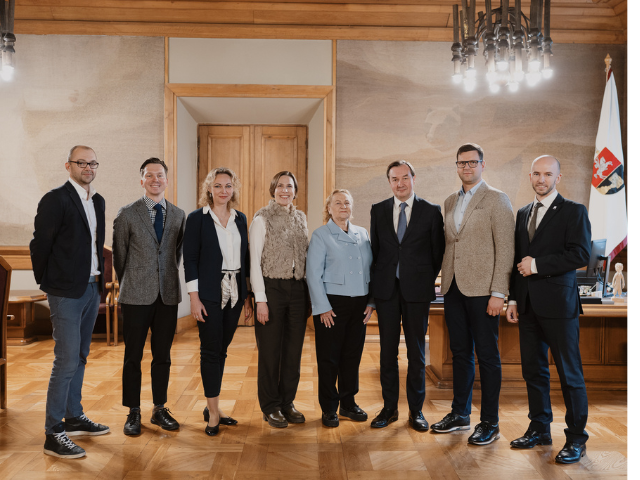
The nominal scholarships of Prof. Virginijus Šikšnys, a biochemist and one of the world pioneers of CRISPR-Cas9 gene editing technology, is awarded for internationally recognised outstanding research results. This year, a EUR 10,000 scholarship established by the City of Vilnius has been awarded to VU PhD students Ugnė Kuliešiūtė and Jonas Juozapaitis.

Some residents of Vilnius and Kaunas will soon find invitations to take part in an important new research in their mailboxes. In a joint project between the Lithuanian University of Health Sciences (LSMU) and Vilnius University (VU), researchers will assess the extent of SARS-CoV-2 infection and the level of antibodies against this infection.

Subcategories