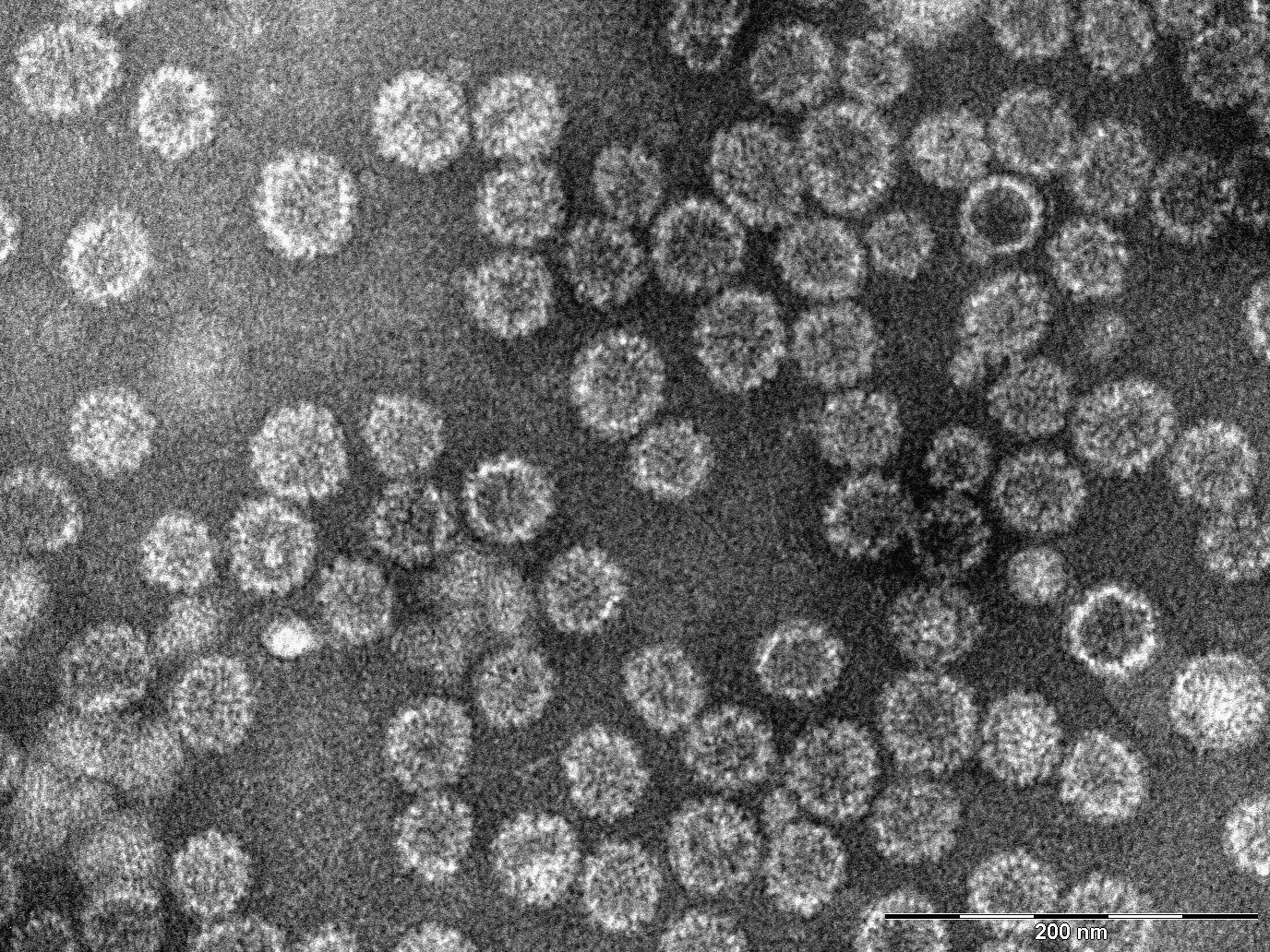
The Department of Eukaryote Gene Engineering is focused on research in recombinant viral and human protein analysis, expression, and assembly of proteins into virus-like particles (VLPs), as well as mechanisms of plant signaling and biosynthesis. We use methods of gene cloning and expression in different host systems, electron microscopy, immunological and functional biochemical assays of proteins, and biosynthesis and purification of sufficient amounts of target recombinant proteins, with application areas including diagnostics and therapeutics.
Investigation of host specificity in Polyomaviruses.
Molecular Biology and Phylogenetic Analysis of Orthomyxoviridae.
Production of recombinant viral proteins in yeast cells.
Improvement of expression systems and yeast genetic background for efficient synthesis of viral proteins.
Improvement of yeast protein secretion capacities.
Identification and characterization of new polyomaviruses, parvoviruses, paramyxoviruses, and hantaviruses.
Investigation of virus-like particle (VLP) formation in yeast cells.
Employment of hamster polyomavirus VLPs as carriers for short and non-immunogenic protein sequences presentation on VLPs.
Identification of new protein carriers.
Human chaperone protein synthesis in yeast.
Evaluation of diagnostic tests based on recombinant viral proteins.
Synthesis of recombinant proteins in E.coli.
Analysis and research of recombinant biopharmaceutical proteins (human cytokines, hormones, viral proteins, recombinant antibody fragments).
Research and analysis of recombinant allergens (human protein allergens of different groups).
Protein synthesis in plant transient expression systems.
Research on plant anthocyanin synthesis regulation.
Viroid studies.
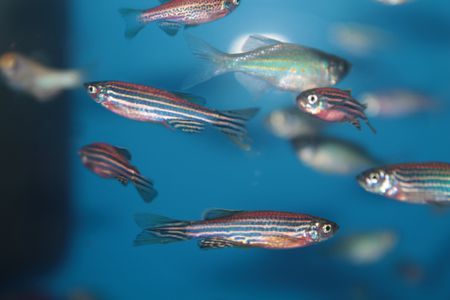
Molecular mechanisms of zebrafish Danio rerio heart regeneration.
Projects
Research projects:
RCL research group project "Investigation of the determinants of polyomavirus pathogenicity and host specificity" (2025–2028) No. P-MIP-25-307. Project leader: M. Norkienė.
RCL research group project “Design and synthesis of protein nanoparticles for allergen-specific immunotherapy” (2024-2027) No. P-MIP-24-228. Project leader: R. Petraitytė-Burneikienė
European cooperation in Science and Technology (COST) project “One Health zoonotic Hepevirus Network” (CA24140). Project leader: R. Petraitytė-Burneikienė.
Contracts:
Abcam Ltd, United Kingdom
Arc Dia International Oy Ltd, Finland
UAB Profarma, Lithuania
UAB Baltymas, Lithuania
UAB Imunodiagnostika, Lithuania
Collaborations:
Friedrich-Loeffler-Institut Bundesforschungsinstitut für Tiergesundheit, Federal Research Institute for Animal Health OIE Collaborating Centre for Zoonoses in Europe (Germany)
Department of Virology, University of Freiburg (Germany)
Max Planck Institute for Molecular Plant Physiology (Germany)
Institute of Virology, Slovak Academy of Sciences (Slovakia)
Kirchenstein Institute of Microbiology and Virology, Riga Stradins University (Latvia)
Department of Medical Research, Mackay Memorial Hospital, (Taiwan)
Achievements
Identified six new common and bank voles', yellow-necked mouse's, rat's and shrews’ polyomaviruses.
Large collection of more than 40 different virus-like particles (VLPs) derived from various polyomavirus (all 13 human polyomavirus, rodents, avian, and other host polyomavirus) VP1 proteins and papillomavirus L1 proteins (HPV6, 16, 18, 31, 33), porcine circovirus type 2 capsid proteins.
Proteins of measles, mumps, rubella, parainfluenza viruses (1-4), hantaviruses, porcine parvovirus, human bocaviruses (1-4), human parvovirus 4, human metapneumovirus, hepatitis E and bovine Schamallenberg virus were produced in yeast cells.
Serological diagnostic tests were developed for the detection of viral-specific antibodies in human serum and saliva samples.
Commercially available Microimmune (UK) measles and mumps diagnostic tests are based on the proteins developed in the department.
Human chaperons (calreticulin and BiP) were produced in yeast cells.
Yeast expression systems for the construction and production of hamster polyomavirus VP1 and VP1/VP2 VLPs as carriers harbouring non-immunogenic peptides or complex molecules of interest.
Genetic engineered yeast strain collection for recombinant protein production.
2003 – Lithuanian Science Prize in the Biomedicine Sciences area.
Patent: Zvirblienė A., Gedvilaitė A., Ulrich, R., Sasnauskas. Process for the production of monoclonal antibodies using chimeric VLPs. US Patent No: US7,919,314 B2. Apr. 5, 2011.
Patent application: Čiplys E., Slibinskas R., Sasnauskas K., Michalak M., Gold L-I. Generation of native recombinant secreted human endoplasmic reticulum chaperones by using their native signal sequences in yeast expression systems. WO 2014/011723 A1.