Premenstrual syndrome (PMS) and premenstrual dysphoric disorder (PMDD) are characterized by psychological and physical symptoms that intensify during the luteal phase of the menstrual cycle and gradually subside with the onset of menstruation. The prevalence of PMDD ranges from 1.6% to 8% of menstruating individuals. PMDD disrupts daily activities and interpersonal relationships, causes chronic stress, and is associated with poor quality of life. Those with PMDD face a higher risk of suicide and are more likely to exhibit impulsive, risky behaviors, such as self-harm. However, due to the lack of detailed diagnostic criteria, limited engagement from the medical and research communities, and the absence of biomarkers, PMDS is often undiagnosed or misdiagnosed as a non-cyclical mood (affective) disorder.
Introduction
Premenstrual syndrome (PMS) and premenstrual dysphoric disorder (PMDD) are characterized by psychological and somatic symptoms that intensify during the luteal phase of the menstrual cycle and gradually resolve with the onset of menstruation. The prevalence of PMDD ranges from 1.6% to 8% among individuals who menstruate (Reilly et al., 2024). PMDD disrupts daily activities and interpersonal relationships, causes chronic stress, and is associated with a poor quality of life (Carlini et al., 2022; Henderson et al., 2025). Individuals experiencing PMDD face a higher risk of suicide (Yan et al., 2021) and are more likely to exhibit impulsive, risky behaviors, such as self-harm (Eisenlohr-Moul et al., 2022). However, due to a lack of comprehensive diagnostic criteria, limited involvement of the medical and scientific research community, and the absence of biomarkers, PMDD is often underdiagnosed or misdiagnosed as a non-cyclic mood (affective) disorder (Kaltsouni et al., 2024).
The aim of this project is to investigate the associations between psychological well-being, socio-emotional behavior, and psychophysiological variables in groups of women who do and do not experience PMS and PMDD symptoms. To achieve this, a long-term (longitudinal) psychophysiological study will be conducted. Women's psychological well-being will be assessed using questionnaires and clinical interview methods. Resting-state electroencephalograms (rsEEG) will be recorded to evaluate cortical functional connectivity. Event-related potentials (ERP) and eye-tracking will be utilized to assess emotional reactivity and regulation. ELISA and/or HPLC-MS methods will be used to determine sex hormone levels for menstrual cycle monitoring. Participants will be invited to psychoeducation sessions and cognitive behavioral therapy (CBT) sessions. These methods will allow for a comprehensive analysis of both the physiological and psychological mechanisms associated with these conditions, ultimately enabling the development of personalized, evidence-based interventions that contribute to the improvement of women's mental health. This justifies the necessity of the study, the importance of the proposed methods and evidence-based data, and the exceptional significance of the project in the field of women's health.
This study is being conducted in collaboration with researchers from Erasmus University (The Netherlands): neuropsychologist Dr. Jūratė Aleknavičiūtė and Dr. Astrid Kamperman.
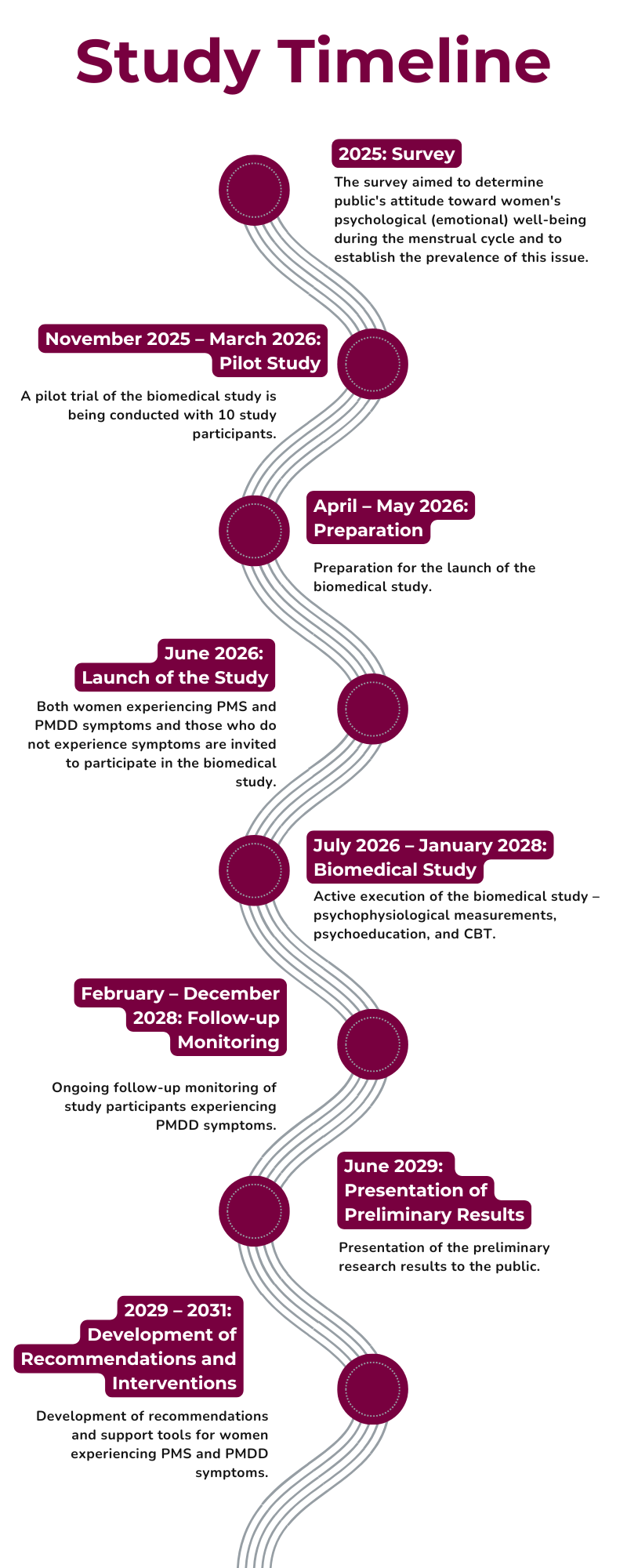
The study takes place between 2025 and 2031 and is conducted in two phases.
Phase One
In the first part of the study, carried out in April–May 2025, we conducted a survey. The aim of the survey was to understand participants' attitudes toward women's psychological (emotional) well-being during the menstrual cycle and to determine the prevalence of this issue. We also hoped to reach women facing emotional and/or physical difficulties during their menstrual cycle and invite them to participate in the planned biomedical study, titled "Premenstrual Dysphoric Disorder (PMDD): Assessment of Women's Psychological (Emotional) Well-Being and the Search for Psychophysiological Biomarkers."
Phase Two
The second part of the study will begin in June 2026 and will involve a comprehensive biomedical PMS/PMDD study aimed at assessing women's emotional well-being and searching for psychophysiological biomarkers. This phase will include a more detailed psychological and biomedical assessment, psychoeducational sessions, and individual specialist consultations.
Recruitment for the study has already begun!
Based on this study, we plan to develop recommendations that will be shared with both the public and the scientific community.