The Group of Plant Cell Biophysics is a part of the Department of Neurobiology and Biophysics at the Institute of Biosciences. The laboratory studies the electrical and photophysical properties of a plant model system with a unique structure and physiology - the characean alga Nitellopsis obtusa - at organelle, single cell, and cell tandem levels.
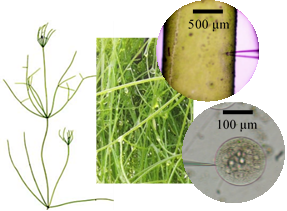
The group conducts research in two directions: it investigates the fundamental physiological processes of plant cells and assesses how these processes can be affected by external environmental factors, including light, oxidative and osmotic stressors, neurochemical molecules, and herbicides.
The laboratory studies the generation, propagation, and transmission of electrical signals in plants, and assesses the functions of individual membrane transport systems at the cellular and single-channel levels. Electrophysiological techniques used include external and intracellular microelectrode techniques, voltage-clamp, current-clamp, and patch-clamp methods.
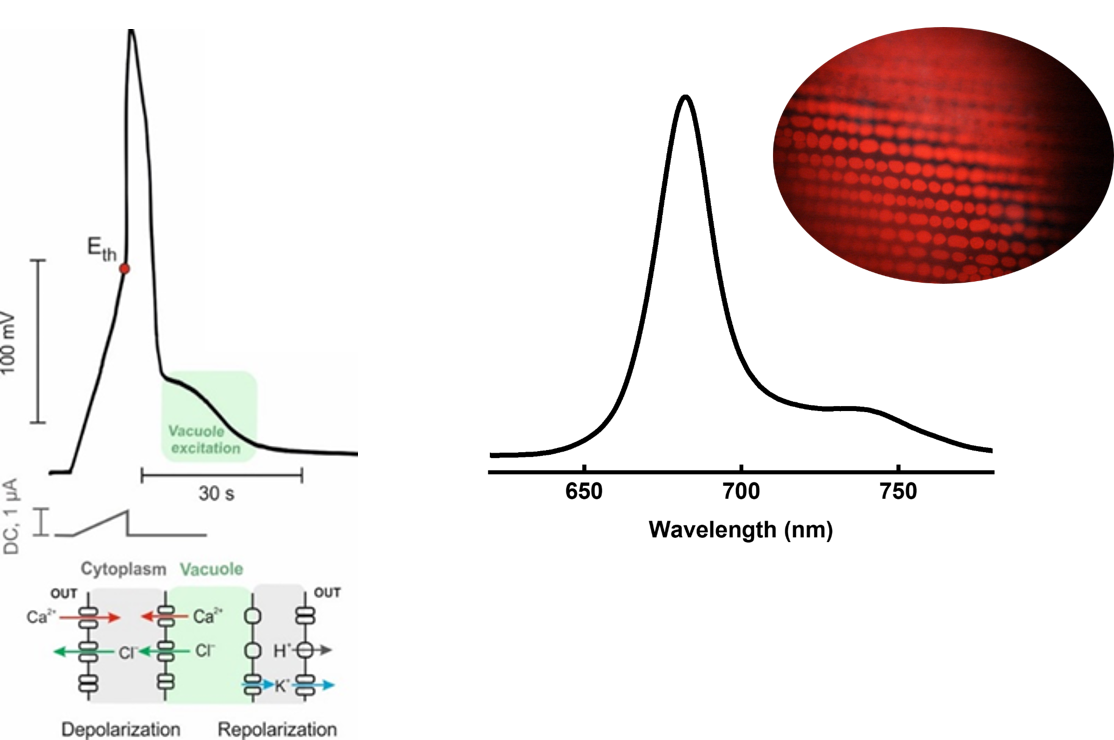
The group also studies one of the most important physiological processes in plants - photosynthesis - and how this process is linked to electrical signals. The photophysical properties of individual algal cells and chloroplasts are evaluated using non-invasive optical techniques. Real-time autofluorescence recording of plant cells is used to analyse the dynamics of photosynthetic processes and photoprotective mechanisms, thereby providing a detailed description of the physiological state of the algae.