

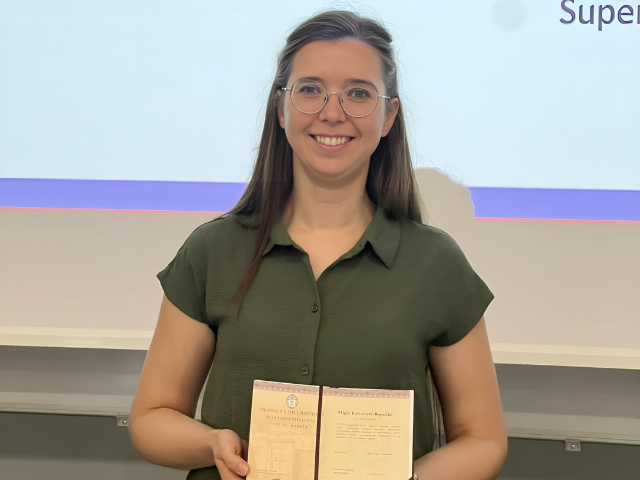
Miglė Kalvaitytė-Repečkė has defended her thesis entitled "Development and Application of Genetic Tools to Investigate the Role of Tcf21 in Heart Regeneration" for the degree of Doctor of Science in Biology.
Scientific supervisor: Dr. Darius Balčiūnas (Vilnius University/Temple University, Natural Sciences, Biology).
Composition of the Dissertation Defense Board: Chairperson - Dr. Arvydas Lubys (Vilnius University, Natural Sciences, Biology), Dr. Jonathan Arias (Vilnius University, Natural Sciences, Biology), Dr. Thomas Juan (Uppsala University, Sweden, Natural Sciences, Biology), Dr. Shih-Lei (Ben) Lai (Academia Sinica, Taiwan, Natural Sciences, Biology), Dr. Skaistė Sendžikaitė (Vilnius University, Medical and Health Sciences, Medicine).
Studies have shown that the epicardium, the outer layer of the heart, promotes cardiac regeneration after injury. The transcription factor Tcf21 is essential for proper epicardium formation during development. However, its function in the adult zebrafish heart has remained poorly explored, as knockouts of this gene are lethal during early development.
This study aimed to determine the role of Tcf21 during zebrafish heart regeneration. To achieve this, a conditional tcf21 allele was generated. Using a tamoxifen-inducible CreERT2 recombinase expressed throughout the organism, we successfully ablated gene expression both in larvae and adult fish. The results demonstrated that Tcf21 is crucial for successful cardiac regeneration. Its absence leads to increased connective tissue at the injury site 60 days post-injury. We found that Tcf21 function promotes the infiltration of dedifferentiated cardiomyocytes into the injury area, but does not affect their proliferation. Furthermore, we generated a transgenic zebrafish line enabling inducible expression of HA-tagged Tcf21. This line can be used to identify direct Tcf21 targets during development and regeneration.
In summary, this study provides new insights into the role of the epicardium in heart regeneration and establishes versatile genetic tools for further investigation of Tcf21-regulated processes.
 |