





R&D PROJECTS
The VU LSC consortium, under the mission program, completed 7 R&D projects aimed at strengthening multidisciplinary expert experience among researchers, developing and bringing to market the most relevant products, and generating new scientific knowledge
1
U-LAVS - Ultrafast laser-assisted in vitro synthesis of DNA fragments
Synthetic DNA – from oligonucleotides to genes – has revolutionized biotechnology and healthcare. It enables gene editing, development of personalized therapies, early diagnostics, vaccine research, creation of novel materials and organisms for industrial, environmental, and medical applications. The aim of the project is to develop an innovative femtosecond laser photonics–based DNA synthesis technology, enabling production of synthetic DNA fragments up to 30kb at unprecedented scale, speed, cost, and quality to satisfy demand for affordable high-fidelity synthetic DNA.
2
ONCOINTEGRA - Development of a clinical multi-omics platform to deliver diagnostic and advanced therapy solutions for oncological diseases
The main objective is to develop an integrative platform that bridges fundamental and translational research in oncology. AI-driven histopathology, multi-omics analyses together, with the cutting-edge bioinformatics and deep learning methods, will help standardize current onco-genetic testing and identify novel biomarkers/therapeutic targets. This will lead to new clinical solutions ranging from patient-specific biomarker panels and software tools to drug repurposing/clinical trial integration.
3
GET-TOOLS - Advancing Genome Editing Through the Development of TnpB & Miniature RNA-guided Tools
Exceptionally compact RNA-guided nucleases – TnpB, IscB, IsrB and TnpB-like CRISPR-Cas12 – just recently received preliminary characterization. Their minimal size and programmability make them an attractive platform for challenging genome engineering applications. This project aims to develop TnpB and other miniature RNA guided proteins for genome editing applications where larger editors, such as CRISPRCas9 and Cas12a, are poorly suited due to their size.
4
HEMATO - Off-the-shelf highly immune compatible iPS cell derived bone marrow
Hematopoietic stem cell transplantation from human donors is still the best treatment for many hematological and oncological conditions. However, donated cells can carry risks such as graft rejection, graft versus host disease, infection, cell senescence and cancer. Providing patients with highly immune-compatible cells should help avoid rejection and permit prompt accessibility for patients in need. This study aims to develop a collection of highly compatible cells for use in cell therapies.
5
IMMUNO - Novel cell-based immunotherapies against solid tumours
Immunotherapy has developed as a life-saving solution to cancer types that are refractory and or relapsed to conventional treatments. It yields excellent clinical outcomes against liquid malignancies as lymphoma and leukaemia. However solid cancer still remains unattended by immunotherapy approaches. In this project we address this unmet need and develop therapeutic solutions focused on the most prevalent solid cancers.
6
SECURE - Safer and Smaller gene Editing tools for CURing genetic diseases of the Eye in vivo
CRISPR-Cas systems show promise for treating genetic eye diseases. Although the research in this field is still in its early stages, some studies have already demonstrated the feasibility and effectiveness. However, the technology still has several drawbacks, such as the large size of most popular Cas9 systems that don't fit into AAV vectors, potential immunogenicity, or target selection restriction by PAM. The goal is to develop safer and more convenient tools for gene therapy in the eyes.
7
SINGLET - Single-cell multi-omics and microfluidics for biomedical applications
Single-cell technologies offer powerful means for discovering new biological mechanisms that drive complex diseases, drug resistance or tumorogenesis. In this R&D project we will establish multi-omics platform for profiling the single-cells. The high throughput nature of suggested approach will provide unprecedent scalability, minimal sample loss and huge cost savings.
MISSION BASED SCIENCE AND INNOVATION PROGRAMMES
Project No. 02-002-P-0001 “Implementation of Mission-Based Science and Innovation Programmes”
Project number: 02-002-P-0001
Project promoter: Innovation Agency Lithuania
Project partners:
-
Kaunas University of Technology Consortium (Vilnius Gediminas Technical University, Mykolas Romeris University, Association Infobalt, UAB Devslate Group, UAB Novian Pro, Lithuanian Cybercrime Competence and Research Centre, UAB Transcendent Group Baltics, UAB Getweb, UAB Acrux Cyber Services, UAB NRD CS, Baltic Institute of Advanced Technology)
-
Vilnius Gediminas Technical University Consortium (Vilnius Gediminas Technical University, Kaunas University of Technology, Lithuanian Confederation of Industrialists, Lithuanian Innovation Centre, Sunrise Valley Science and Technology Park, Kaunas Science and Technology Park, UAB SG Dujos Auto, UAB Arginta, UAB 3D Creative, UAB Ekobazė, UAB Provectus Redivivus, AB Kelių priežiūra, UAB Soli Tek R&D, UAB Nanoversa)
-
Vilnius University Consortium (Vilnius University, Vilnius University Hospital Santaros Klinikos, State Research Institute Centre for Physical Sciences and Technology, UAB Femtika, UAB Droplet Genomics, UAB Caszyme, UAB Vugene)
Project description:
The project “Implementation of Mission-Based Science and Innovation Programmes” is implemented in three priority mission areas in line with Smart Specialisation priorities:
-
“Safe and Inclusive e-Society” – implemented by the Kaunas University of Technology Consortium;
-
“Smart and Climate-Neutral Lithuania” – implemented by the Vilnius Gediminas Technical University Consortium;
-
“Innovations for Health” – implemented by the Vilnius University Consortium.
The missions in different areas promote joint science–business collaboration projects, development and commercialisation of business and research ideas through start-ups/spin-offs, fundamental or early-stage research, and addressing existing service and infrastructure gaps for R&D activities at higher technology readiness levels. The project will also address the lack of incubators for spin-offs/start-ups, prototyping spaces, and pilot production lines.
The activities of the project will be implemented until April 2026. During this period, 3 competence centres (one in each mission area) will be established, 23 R&D projects implemented, 41 prototypes and 32 unique products developed, 19 international patent applications submitted, 55 scientific publications published, and 21 start-ups/spin-offs established.
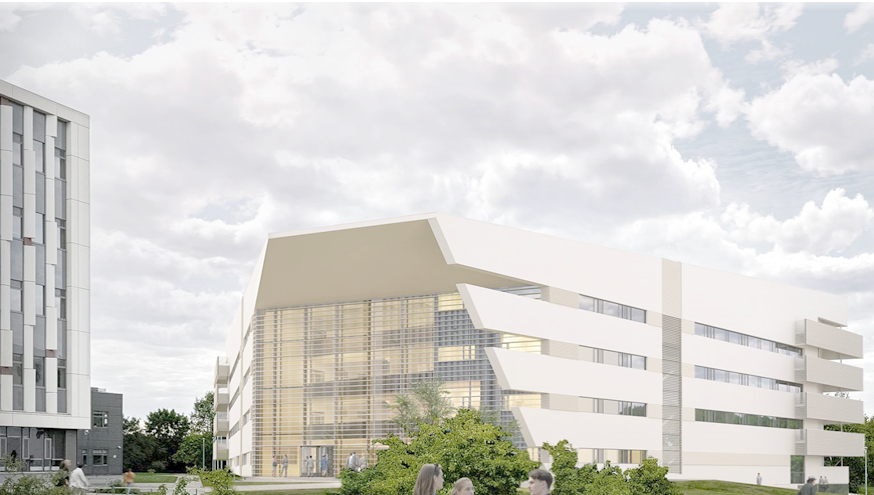
Within the theme “Innovations for Health”, the Vilnius University Consortium aims to establish a Gene Technology Competence Centre, bringing together clusters of advanced scientific equipment (next-generation sequencing and bioinformatics, cytometry and cell sorting, microscopy and imaging, cell culture, microbiology, bioengineering, and mass spectrometry) as well as multidisciplinary scientific expertise. This will ensure the effective implementation of new biomedical programmes and the improvement of existing treatment strategies, with particular focus on age-related diseases and cancer. Alongside advanced infrastructure and a business-type management structure, the consortium seeks to positively impact national R&D progress, healthcare, and the economy.
The consortium is implementing 7 mission-driven R&D projects aimed at strengthening multidisciplinary scientific expertise, creating and offering relevant R&D products, and generating new scientific knowledge in the following areas:
-
U-LAVS – Ultra-fast laser-induced in vitro DNA fragment synthesis
-
ONCOINTEGRA – Development of clinical multiomics platforms for cancer diagnostics and advanced therapeutic solutions
-
GET-TOOLS – Improving genome editing by developing TnpB and miniature RNA-guided tools
-
HEMATO – Creation of a universal collection of immunocompatible cells for cell therapies
-
IMMUNO – Innovative cell immunotherapy tools for cancer treatment
-
SECURE – Safer and smaller genome-editing tools for in vivo treatment of genetic eye diseases
-
SINGLET – Single-cell multiomics and microfluidics for biomedical applications
Project objectives:
-
“Safe and Inclusive e-Society” – to increase cyber resilience and reduce risks of privacy breaches and personal data leaks, thus improving Lithuania’s cybersecurity and ensuring a safer, more inclusive digital society.
-
“Smart and Climate-Neutral Lithuania” – to improve environmental quality and reduce air pollution by contributing to the reduction of greenhouse gas emissions in Lithuania, promoting sustainable solutions in the construction sector, and accelerating the transformation of the construction market towards sustainability and zero waste.
-
“Innovations for Health” – to establish the Gene Technology Competence Centre.
Project activities:
-
Investments in competence centres – establishment of 3 competence centres (construction and acquisition of R&D equipment);
-
Joint mission programmes – implementation of 23 R&D projects;
-
Innovation support and consultancy services.
Project value: EUR 94.728 million
Project funding: EUR 88.530 million (funded by the Economic Recovery and Resilience Facility “NextGenerationLT” and the State Budget of the Republic of Lithuania)
|
|
 |