

What is evil, and when does it emerge? In physics, there is neither good nor evil – chaos is not inherently bad, just as order is not inherently good. Destruction and stability are simply different physical states that can be described through laws and processes.
Yet somewhere along the path from physics and chemistry to conscious animals, and eventually to humans and their relationships with others, concepts emerge that physics itself does not recognize: suffering, care, responsibility, good, and evil. So where and how does this transformation occur? What physical and biological conditions allow us to experience, recognize, or create what we call evil? How do interactions between particles, order and chaos, stability and instability eventually give rise to life, consciousness, the ability to understand others, and ultimately the capacity to judge our own actions and those of others? Perhaps physics cannot tell us what is good or evil. But can it help us better understand the conditions that make it possible to speak of good and evil in the first place?
In this discussion, we will explore the journey from the physical world to consciousness and moral judgment. Together with experts in physics, philosophy, and journalism, we will ask what science can tell us about the nature of evil, what philosophy can contribute, and whether it is possible to draw a clear line between objective processes and the moral categories we create ourselves.
Speakers:
-
Paulius Gritėnas – philosopher, journalist, political scientist, and Advisor to the Rector of Vilnius University
-
Urtė Karalaitė – journalist and creator of the project “Neišgirsti balsai” (Unheard Voices)
-
Dr. Mažena Mackoit-Sinkevičienė – physicist and researcher at the VU Faculty of Physics
Moderator: PhD candidate Ieva Šiugždaitė
Registration: https://forms.cloud.microsoft/e/d93ckpKaSV
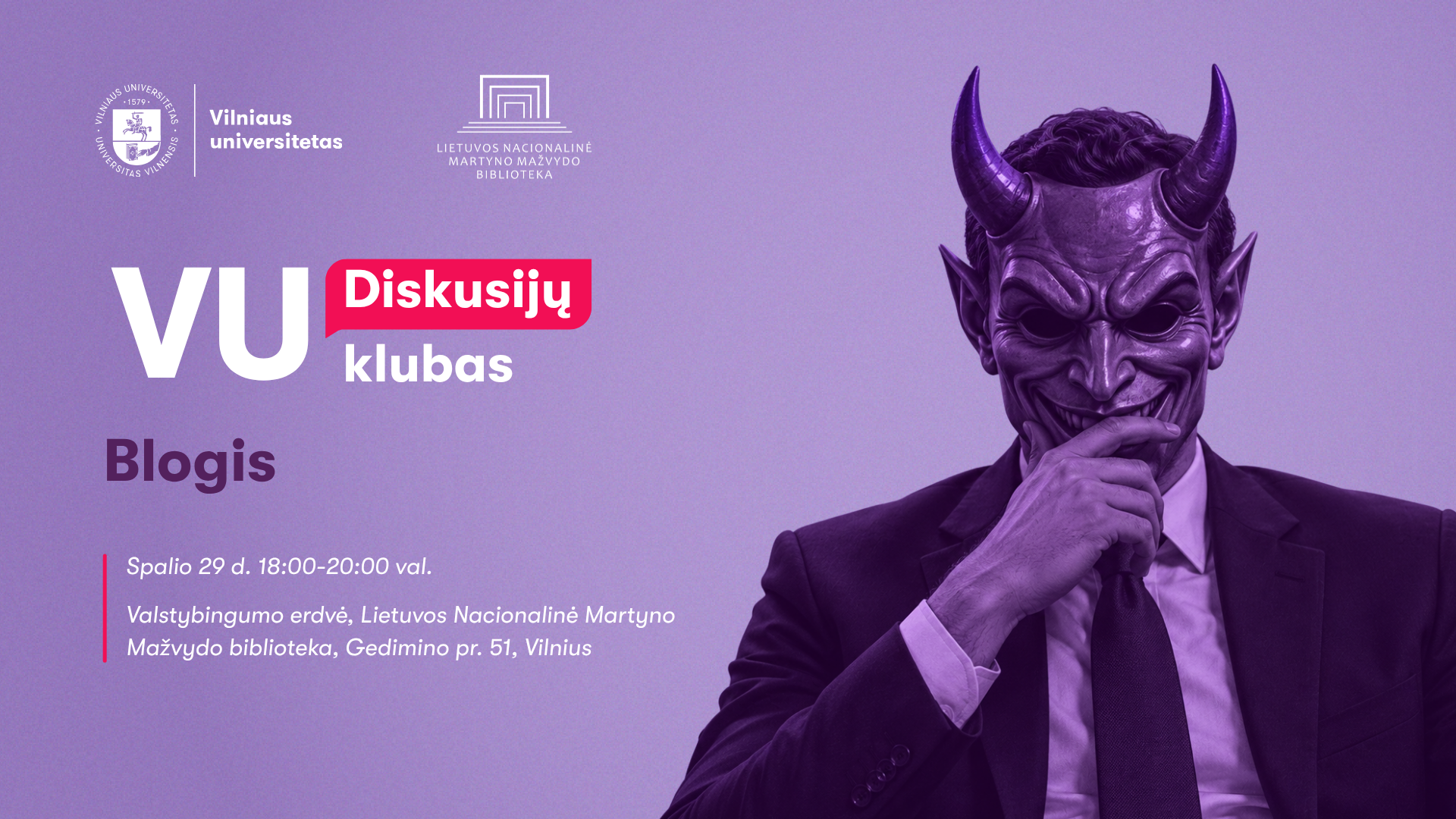
Date: October 29
Venue: Statehood Space, Martynas Mažvydas National Library of Lithuania, Gedimino Ave. 51, Vilnius
Please note: The event will be held in Lithuanian.
 |