

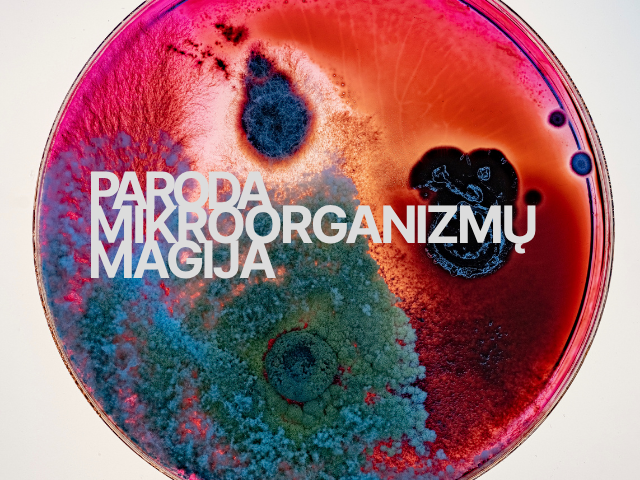
On October 8 at 11 a.m., an exhibition titled “The Magic of Microorganisms” will open at Vilnius University’s Life Sciences Center (Saulėtekio Ave. 7, Vilnius), near auditorium R209.
The opening will feature Rimas Meištininkas, head of the soil remediation site of UAB “Toksika” in Jonava, who will share his experience of using microorganisms to clean soil contaminated with petroleum products, and Dr. Arvydas Lubys, director of the Vilnius University Life Sciences Center.
Photographers: Paulius Makauskas and Petras Saulėnas
Concept author: Spartakas Petrovas
Using a special microscope-based setup designed by Petras Saulėnas, the photographers spent several days in the studio capturing microorganisms invisible to the naked eye. By harnessing the magic of light and employing diverse color effects, they created vivid, breathtaking artworks – images of microorganisms transformed into art.
Photographer Paulius Makauskas shares his thoughts:
“Before starting this project, I had no idea that oil-contaminated soils could be cleaned by microorganisms. More precisely – that such important work could be done through cooperation between humans and microorganisms. This approach deeply intrigued me. I believe it is a powerful symbol and a reference to how we should envision our future – as an equal, interspecies coexistence. Or perhaps even as the only way to survive. Preserving ecosystems with all their participants means preserving ourselves.
Wonderful scientists – Dr. Algimantas Paškevičius, Dr. Jurgita Švedienė, and PhD student Jonas Žvirgždas – from the Nature Research Centre’s Laboratory of Biodestructor Research cultivated microorganisms in Petri dishes. Yeasts, bacteria, and fungi thrived there. We also received empty Petri dishes – following their instructions, we placed pieces of contaminated soil on them. To our surprise, patterns of various colors and shapes began to emerge as if from nowhere. It reminded us of the very essence of life – mysterious yet capable of creating wonders.”
The exhibition is organized by UAB “Toksika”.
The main activity of UAB “Toksika” is the management of hazardous waste, including the treatment of soil, sludge, and water contaminated with petroleum products, using environmentally friendly biological cleaning methods. These methods help avoid the formation of harmful by-products during treatment, thus ensuring the restoration of soil and water resources and reducing the negative environmental impact of pollutants. Each year, the company treats around 20,000 tons of oil-contaminated soil, sludge, and water at its remediation sites, thereby reducing pollution and environmental risks.
By focusing on the process of cleaning petroleum-contaminated soil, specialists have developed new biopreparations and combinations of microorganisms.
When treating soil, sludge, and water contaminated with petroleum products, UAB “Toksika” uses a biopreparation developed together with scientists from the Nature Research Centre’s Laboratory of Biodestructor Research – Dr. Algimantas Paškevičius, Dr. Jurgita Švedienė, and PhD student Jonas Žvirgždas – and patented by the Lithuanian Patent Office on September 10, 2024 (Patent No. LT7087B). The preparation consists of oil-oxidizing yeasts, fungi, and bacteria.