

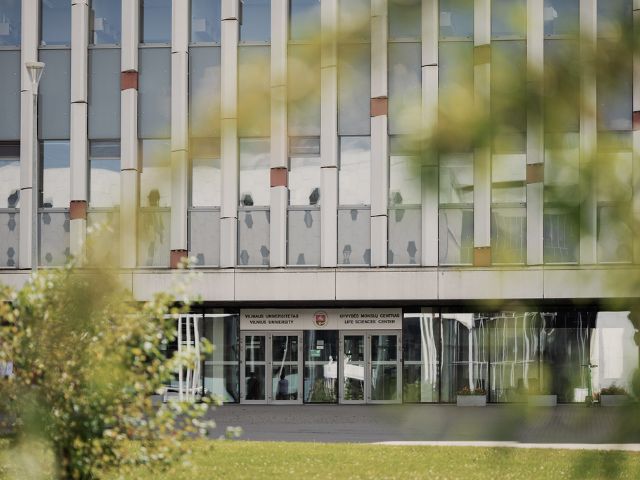
Two projects by researchers from the Vilnius University Life Sciences Center (VU LSC) received the highest evaluation scores in the Research Council of Lithuania’s call for Technology Development Projects. Both focus on practical applications and address pressing public health challenges: developing solutions that make it easier and faster to assess the body’s condition, and using artificial intelligence to improve drug production technologies for greater efficiency.
Testing without the need for a laboratory
Among the top-rated projects is the development of a portable amino acid measuring device, the Aminometer. Total amino acid levels in the blood remain a relatively underexplored but important indicator that can reveal muscle condition, nutritional status, and metabolic disorders. However, measuring them currently requires laboratory equipment and specialised expertise, which limits their use in practice.
The project aims to overcome this limitation by bringing testing closer to the patient. Building on an earlier prototype developed in collaboration with the European Space Agency (ESA), a finger-sized, calibration-free electrochemical device is being created. It is expected to enable rapid and reliable assessment of amino acid balance from a single drop of blood and to open up opportunities for its use in clinical diagnostics, sports medicine, and monitoring physical recovery.
The project is being carried out by researchers from the Department of Bioanalysis at the Institute of Biochemistry, Vilnius University Life Sciences Center, in collaboration with the company SensoLife (UAB Bioanalizės sistemos).
Artificial intelligence for drug development
The second project focuses on applying artificial intelligence to develop new enzymes – proteins that accelerate chemical reactions and are widely used in pharmaceutical manufacturing. The aim is to create a set of new and improved epoxidases that would help rapidly identify the most suitable biocatalysts for producing beta-blockers, drugs used to treat heart disease.
Only a limited number of such enzyme-active proteins are known in nature, meaning the current biotechnological supply does not meet demand. The newly developed enzymes are expected to be more efficient, more stable, and suitable for a broader range of chemical reactions. This would not only improve the efficiency of drug production but also accelerate their development and reduce manufacturing costs.
The project is being implemented by VU LSC researchers together with the company UAB Biomatter Designs.
Strengthening science–business collaboration
This funding instrument of the Research Council of Lithuania aims to strengthen sustainable collaboration between science and business, ensuring that solutions developed in academia can be advanced, when there is business demand, into market-ready products or prototypes. Projects cover both applied research and experimental development – from proof of concept to prototype demonstration in real-world environments.
The programme also encourages the involvement of doctoral candidates and early-career researchers, as well as private-sector investment in R&D activities. Projects are carried out by higher education and research institutions in collaboration with small and medium-sized enterprises, thereby contributing to the development and commercialisation of solutions.
The results of the call once again highlight VU LSC's strength in creating high-value-added solutions and its ability to collaborate with industry, successfully translating research into practical applications.