

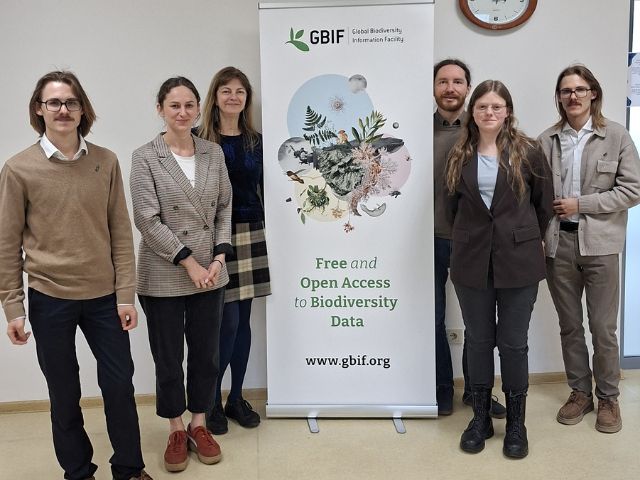
From 16–20 March, the project Capacity Building in Biodiversity Data in Lithuania held training sessions at the Nature Research Centre in Vilnius. The project is implemented by researchers from the Institute of Biosciences at the Vilnius University Life Sciences Center, the Nature Research Centre, and the Kaunas Tadas Ivanauskas Museum of Zoology, in collaboration with experts from the Swedish Museum of Natural History and the Global Biodiversity Information Facility (GBIF Sweden).
Although Lithuanian researchers and students actively use the data available through the global biodiversity platform GBIF – ranging from species distribution to taxonomy and species checklists – Lithuania’s own contribution to the network remains limited.
This gap is also highlighted by Assoc. Prof. Andrius Petrašiūnas of the Vilnius University Life Sciences Center. He notes that the lack of publicly accessible data prevents a clear understanding of what biodiversity is preserved in the country’s museums.
“Research results accumulated by scientists, although published in scientific articles, often remain difficult to access for reuse. This means that part of the knowledge generated never reaches broader application,” he says, emphasising the importance of open data for both science and environmental decision-making.
During the training, lecturers and students from the Vilnius University Life Sciences Center explored the wide-ranging benefits of GBIF and the possibilities of sharing their own biodiversity data. While open data sharing is still emerging and has yet to become common practice, such initiatives, according to the organisers, offer reasons for optimism.
The Global Biodiversity Information Facility (GBIF) is an international network and open data infrastructure funded by governments worldwide. It provides free access to biodiversity data published by thousands of institutions through a shared platform, supporting science, policy-making, and biodiversity conservation.