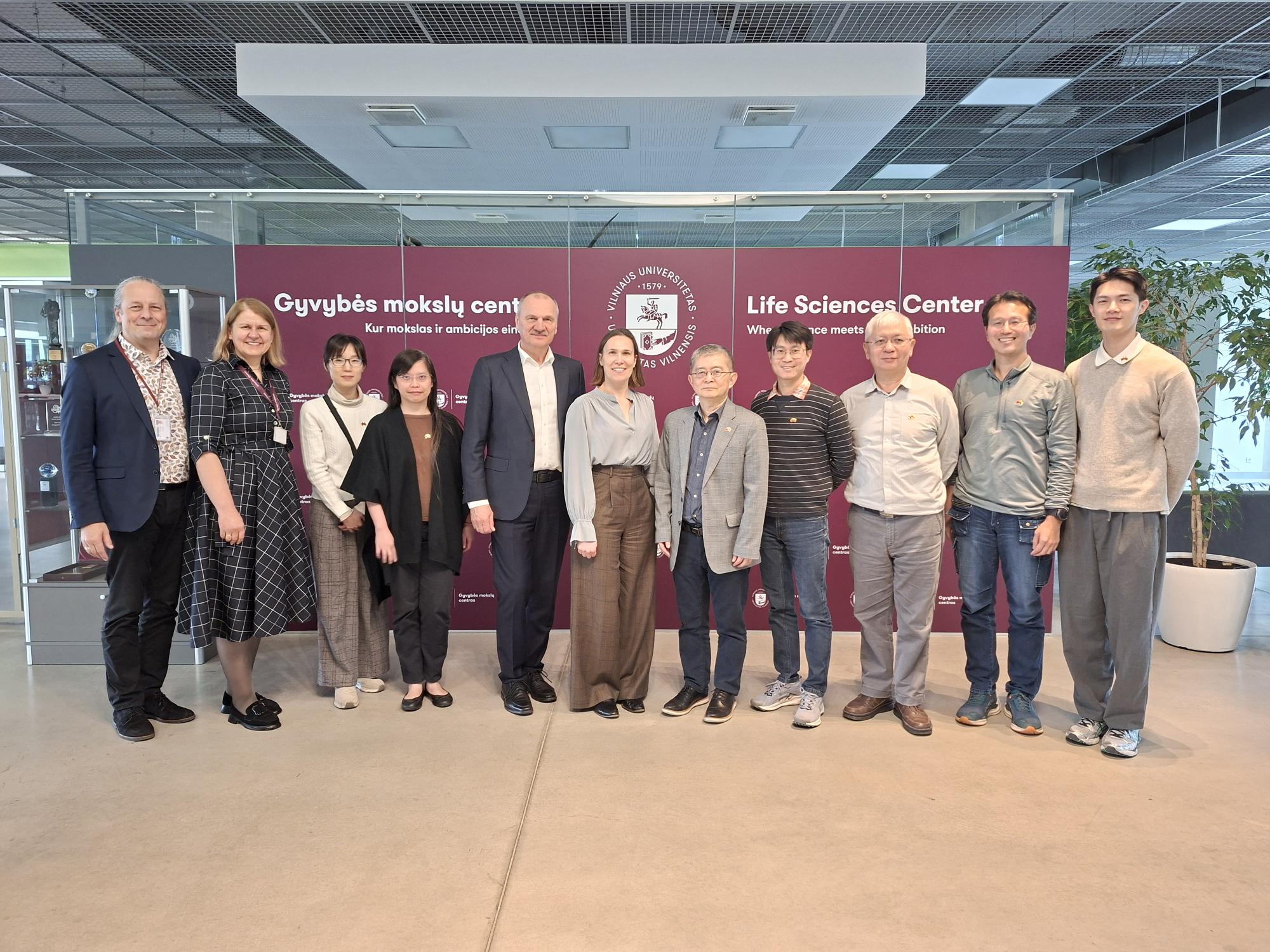
On 20 March, the Vilnius University Life Sciences Center welcomed a delegation of researchers from the Institute of Molecular Biology Academia Sinica in Taiwan, led by its Director, Hwai-Jong Cheng.
The Academia Sinica is Taiwan’s national research institution, founded in 1928. It is regarded as the country’s foremost academic institution, conducting high-level research in various fields and actively collaborating with international partners.
The visit centred on a scientific seminar, during which the Taiwanese researchers presented their latest work and introduced opportunities for international collaboration. The programme opened with an overview of the TIGP-X international doctoral exchange programme, which aims to foster global mobility and cooperation among early-career scientists.
Throughout the seminar, speakers covered a broad range of topics in molecular biology and neuroscience. Presentations explored neural development and regeneration, the functioning of sensory systems, genetic disease modelling using model organisms, and the role of non-coding RNA in brain development and ageing. Other talks highlighted advances in gene regulation, RNA splicing mechanisms, and cellular structures involved in reproduction and cell organisation.
In addition to the seminar, the delegation met with representatives of VU LSC administration to discuss institutional activities and potential avenues for collaboration. The visit also included individual meetings with VU LSC scientists, during which both sides explored potential joint research projects.
The visit was organised by Professor Urtė Neniškytė, who has previously visited Academia Sinica during her own visit to Taiwan. It marks another step in expanding international partnerships for the VU Life Sciences Center, reinforcing connections with leading research institutions in Asia and promoting future collaboration in molecular biology and neuroscience.