

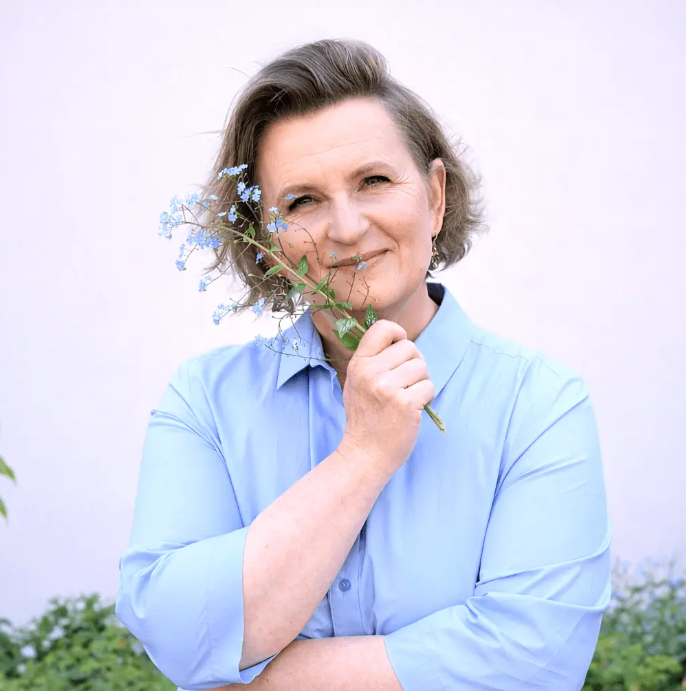
Concrete, asphalt and paving stones turn cities into heat islands, while poorly selected plants can increase the risk of allergies. Yet the solution is often right next to us – trees, shrubs and natural ecosystems that can cool cities, clean the air and improve quality of life. Rasa Laurinavičienė, a PhD candidate at the Life Sciences Center of Vilnius University (VU LSC) and a landscape architect, explains how urban planning should change and what mistakes are still being made today.
The biggest mistakes in planning urban greenery
R. Laurinavičienė emphasises that we are currently witnessing a turning point – moving away from the Euro-renovation mindset, where greenery was treated merely as a decorative addition, toward an understanding that it is a critical part of urban infrastructure.
“One of the biggest mistakes remains fragmentation, when green spaces are planned as separate islands rather than a continuous network. There is also still too little attention paid to biodiversity and to the impact of plants on human health – for example, the allergic background they create is often not assessed,” the researcher notes.
Another important issue is that plant species are often selected for their attractive appearance in photographs but are not resilient to local microclimates or winter road salt.
“This year, for the first time in a long while, we experienced a winter with several nights of severe frost, and roads were salted for much longer than usual. Salt is a herbicide that damages tree roots and prevents them from absorbing water. So I see a certain dichotomy – on the one hand, cities plant trees, while on the other, they destroy them using salt. Scandinavia provides a good example of how different types of de-icing materials and gravel can be used to maintain both roads and trees,” says R. Laurinavičienė.
In Lithuanian cities, the aesthetic function of greenery still dominates, yet the climate crisis is imposing new rules. In the context of climate change, functionality must become the priority – plants must help cities survive extreme weather conditions.
“Architects usually focus on form, businesses on the profitability of square metres, and residents on their quality of life. This fragmented perspective is a luxury we can no longer afford. Green spaces must provide ecosystem services: cooling the air, absorbing stormwater and cleaning pollution,” the scientist says.
Reconciling the interests of architects, businesses and residents is only possible through early dialogue and education. The key lies in understanding that greenery is not an expense – it is value creation.
“When I speak with real estate developers, I notice that greenery is always treated as a cost. That is not entirely correct, because during the development stage, these investments can attract buyers and increase the price per square metre. People do not want to live in concrete jungles – they want to have a larger or smaller green oasis somewhere nearby,” the researcher notes.
Research will evaluate how plant species affect air quality
R. Laurinavičienė’s doctoral dissertation aims to determine how different plant species and their combinations influence air quality in urban environments in terms of aeroallergens.
“In the air, we have not only pollen, but also mould spores and even microplastics. Trees are our allies in the fight against heat, yet certain species can become a serious challenge for some residents. We also need to keep in mind that urban pollution and particulate matter often modify the surface of pollen grains, making them even stronger allergens,” the researcher explains.
As part of her research, R. Laurinavičienė evaluates the pollen abundance produced by the trees and shrubs most commonly planted in cities and their potential to trigger allergic reactions.
“I aim to develop a methodology that would allow urban planners and landscape architects to assess the future ‘allergic load’ of a space already at the design stage. This is particularly important today, when the number of people suffering from allergic rhinitis and asthma is increasing dramatically. Plant selection based on scientific data could help create a city that maintains biodiversity while remaining safe for all residents, regardless of their health condition,” the scientist says.
Pollen in the city: from monocultures to “botanical sexism”
When planning urban greenery, the risk of allergies can be reduced by maintaining biodiversity: the more diverse the species in one place, the lower the concentration of a particular allergen in the air.
“Large monoculture plantings of highly allergenic species should be avoided. Even less allergenic plants, when planted in large masses, can create an unsuitable environment for people with allergies. One example is the Lutheran Garden in Vilnius, where most of the vegetation consists of Norway maples. Such single-species plantings also allow diseases and pests to spread more easily,” the researcher notes.
It is also important to create multi-layered plantings that mimic natural ecosystems. Shrubs and tall herbaceous plants act as physical filters, trapping street dust and low-flying pollen.
“In nature, we rarely see trees or tall shrubs growing on top of layers of pine bark mulch. Everything grows in layers – starting with moisture-retaining mosses, then shrubs, and finally large trees. Such ecosystems retain moisture, support healthier root systems and help capture air pollution,” the researcher explains.
In cities, the greatest allergic load is created by anemophilous (wind-pollinated) plants that release large amounts of fine pollen. Among the most allergenic trees are birch, alder and hazel, as well as certain invasive species such as box elder.
“Sometimes a certain contradiction arises because much emphasis is placed on using native rather than non-native plants in urban landscaping. Birch, alder and hazel are indeed native species – but are they really the best choice for cities? Meanwhile, entomophilous (insect-pollinated) plants, such as lindens, produce heavier, sticky pollen that does not travel long distances in the air and is therefore a safer option for urban environments,” the researcher says.
Some grasses and weeds can also cause allergies, which brings us back to the discussion about natural, unmown meadows in cities.
“We could list many reasons not to mow these meadows. But when it comes to allergies, after birch and alder, the most allergenic plants belong to the grass family. Therefore, areas of unmown meadows should be planned carefully and avoided near pedestrian and cycling paths,” R. Laurinavičienė notes.
Another issue is the phenomenon known as “botanical sexism”. Cities often choose to plant only male trees because they do not produce fruit – yet these are precisely the plants that produce pollen, leading to extremely high pollen concentrations in the air.
“In warmer countries, ginkgo trees are widely used in urban landscaping, with only male trees planted. Female trees produce fruits that emit an unpleasant smell when they fall onto pavements, which is why they are avoided,” the researcher explains.
According to R. Laurinavičienė, the goal should not be prohibition but diversification, ensuring that no single species becomes a dominant source of allergens. Responsible plant selection is the simplest way to reduce the allergic burden.
“To make everyday life easier for people with allergies, it would be very useful to have an interactive map of Vilnius showing areas where the allergic background is higher during different months of the year,” she adds.
Trees – natural air conditioners for cities
Urban heat islands occur when built-up areas absorb heat from asphalt, concrete, and dark roofs, making them several degrees warmer than surrounding less developed or suburban areas.
“This becomes a serious problem because increasing heat directly correlates with higher mortality, cardiovascular diseases, and poorer sleep quality. At night, the city does not have time to cool down, so residents experience constant thermal stress,” the researcher points out.
Lithuanian municipalities are already preparing greening plans and heat-island maps to avoid excessive temperatures in city squares and other frequently visited public spaces.
“Heat islands are increasingly forming not only in densely built metropolitan areas but also in smaller towns. When central squares become ‘deserts of paving stones’, even nearby cooling fountains fail to attract people on hot summer days. We will probably see a time when paving stones are replaced by plants that cool and purify the air,” she says.
Heat islands also increase energy consumption for air conditioning, creating a vicious cycle: more air conditioners release more heat outdoors.
“In cities with little greenery, the temperature difference can reach as much as 10–12 degrees. This is not only a matter of comfort – it is a public health and economic challenge. Many cities are rapidly densifying, and the price per square metre of real estate is becoming more important than green spaces. If nothing changes, some city centres may become almost uninhabitable during the daytime in summer within the next 20 years,” the researcher warns.
According to R. Laurinavičienė, mature trees with dense canopies act as highly effective bio-air conditioners in summer. They provide shade, evaporate water, and cool the surrounding air.
“It is often said that a single mature tree can cool the air as effectively as ten industrial air conditioners. But it is a mistake to think that removing one mature tree and planting ten young ones will create the same effect. Their canopy is much smaller, and more importantly, when planted in a heat island, only a small portion of them will survive and continue to grow,” she says.
The city of the future: green roofs, green façades, and rain gardens
According to R. Laurinavičienė, the ideal city of the future would resemble a combination of a “sponge city” and a “forest city”, where the boundary between architecture and nature disappears.
She hopes that in 20–30 years, greenery will be found not only in parks but also on many roofs, façades, and balconies.
“Greening the façades of apartment buildings with climbing plants improves energy efficiency and helps save electricity both when cooling buildings in summer and heating them in winter, due to the insulating air layer that forms,” the scientist notes.
Properly designed green roofs, planted with vegetation, help manage rainwater during heavy rainfall, absorbing some of it and slowly releasing the rest into the soil.
“If a green roof is extensive – planted with sedums or similar vegetation – its permeable green layer helps collect rainfall and slowly redirect it, for example, to irrigate nearby greenery. There is also the concept of an intensive green roof, where the roof becomes a large terrace with shrubs, trees, and other plants growing on the structure. However, such solutions must be planned during the building design stage, with sufficiently strong structural elements,” she explains.
In the city of the future envisioned by the researcher, streets would be shaded, and asphalt and concrete paving would be replaced by permeable surfaces and rain gardens wherever possible.
“It is very important to open up as much permeable ground as possible. Asphalt is the largest heat accumulator, so it should be replaced with permeable surfaces or grass. Rainwater management is inseparable from the fight against heat. Rain gardens are a particularly effective solution – rainfall from surrounding areas is directed through drainage pipes into planted depressions, where suitable vegetation absorbs the water. This reduces pressure on sewage systems and, with the right plants, can also improve urban air quality,” she says.
A greener city begins with small decisions
When asked what actions we should take to live in greener cities, the researcher stresses that first and foremost, we must stop destroying what we already have. Preserving one mature tree is ten times more valuable than planting five young saplings.
“Municipalities should urgently review their green space standards and begin ‘de-asphalting’ processes – wherever cars or intensive pedestrian movement are not necessary, greenery should be introduced. Green space management strategies should also be revised to include health criteria, particularly allergen assessment in urban green areas. We must change our attitude toward lawns – allowing them to become natural meadows where possible- to promote biodiversity. Real estate developers should focus not only on square metres but also on the planning and long-term maintenance of quality green spaces,” Laurinavičienė says.
Residents also have an important role: avoiding invasive or highly allergenic plant species, creating green spaces on balconies, and avoiding chemical fertilizers.
“The entire city should be connected into a green network through parks, streets, and balconies – what we might call an ecological corridor. Small collective actions today will determine whether our cities remain vibrant in the coming decades. We must change our mindset: a tree is not a source of falling leaves, it is a provider of oxygen and cool air. As the saying goes, the best time to plant a tree was 20 years ago – the second best time is today,” concludes R. Laurinavičienė.