

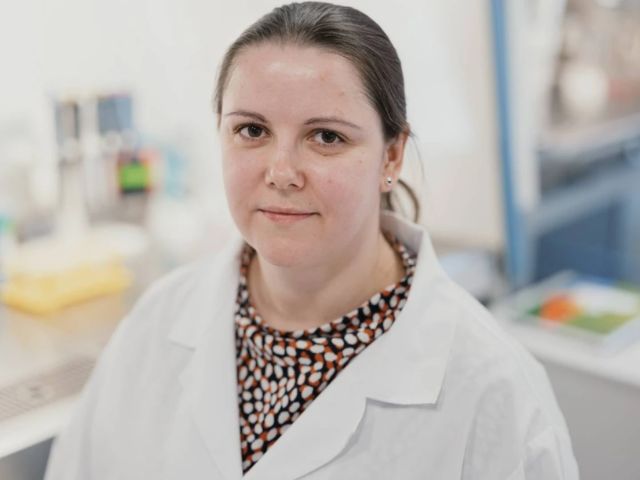
A new high-content imaging (HCI) system valued at €950,000 is now operational at the Vilnius University Life Sciences Center (VU LSC). This modern equipment will allow researchers to develop advanced medical solutions and test new treatment methods faster and more efficiently. The system was acquired through the EU-funded Mission-Driven Science and Innovation Programmes project coordinated by the Innovation Agency Lithuania.
Supporting the development of health innovations
The advanced Revvity Opera microscopy system installed at VU LSC will enable researchers to obtain highly detailed images of cells and their individual structures. The device can process multiple samples simultaneously, enabling studies to be completed more quickly. The system is designed for real-time cell observation and is equipped with intelligent software that automatically analyzes images and helps identify key information.
“The new equipment will support the development of innovative cellular immunotherapy tools for the treatment of oncological diseases as well as universal cell therapy approaches. The instrument will also be used in other VU LSC research projects that require detailed cellular imaging and multiparametric quantitative analysis,” says Indrė Dalgėdienė, Head of the Equipment Cluster of the TRACEGET project at VU LSC.
Vilnius University leads a consortium of research and business partners within one of the project’s missions – Innovations for Health. Within this mission, experts from different fields have joined forces to advance cutting-edge research and develop innovative solutions in the health sector. The advanced equipment was acquired as part of this mission's implementation.
The project foresees not only the modernization of technological infrastructure but also the establishment of the Translational Center for Gene Technology (TRACEGET). The center will bring together state-of-the-art equipment and highly qualified specialists, while also providing an open environment for collaboration.
Strengthening the technological base
The Revvity Opera system is only one part of the advanced technological equipment planned and already installed at the Translational Center for Gene Technology. The total value of solutions acquired for the center, funded by the Mission-Driven Science and Innovation Programmes project, amounts to €12 million.
“The high-content cell imaging system and other newly acquired solutions expand the technological capabilities of VU LSC to conduct advanced cellular research and provide an infrastructure foundation for future collaborative projects not only within the VU consortium but also in other contexts,” says Julius Gagilas, Vice-Director of VU LSC for Industry Partnerships and Infrastructure.
Investing in a strong innovation ecosystem
According to Martynas Survilas, Head of the Breakthrough Department at the Innovation Agency Lithuania, unlocking the full potential of Lithuania’s life sciences sector requires combining existing competencies with modern technological infrastructure.
“Advanced technological equipment enables competence centers in Lithuania to conduct top-quality research that opens opportunities for innovations with real impact and for collaboration between science and business. This strengthens the country’s entire innovation ecosystem and supports Lithuania’s transformation into a high value-added economy,” he says.
Within the health-innovation-focused VU consortium, representatives of science and business aim to accelerate the transfer of health innovations into medical practice. The consortium’s activities cover several key areas, including early disease diagnostics, the development of advanced oncology therapies, cellular immunotherapy tools, gene-editing technologies, gene-engineering tools for treating genetic diseases, and research to advance personalized medicine.
€37.2 million for health innovations
In total, €37.2 million has been allocated to projects implemented by the VU consortium within this mission. The consortium includes not only research institutions but also companies, ensuring that scientific solutions are translated into products or therapies accessible to patients. Alongside Vilnius University, the consortium includes the Center for Physical Sciences and Technology, Vilnius University Hospital Santaros Klinikos, and companies Femtika, Droplet Genomics, Caszyme, and Vugene.
The Mission-Driven Science and Innovation Programmes consist of three main missions. Alongside the VU consortium developing innovations for health, a consortium led by Vilnius Gediminas Technical University focuses on innovations contributing to climate neutrality. In contrast, a consortium led by Kaunas University of Technology works to strengthen cybersecurity and increase the resilience of an inclusive digital society.
In total, €88.3 million has been allocated to projects implemented by all consortia. The majority of this funding comes from the European Recovery and Resilience Facility, while €11.7 million is provided by the Lithuanian state budget.
The programmes were initiated by the Ministry of the Economy and Innovation together with the Ministry of Education, Science and Sport, and their implementation is coordinated by the Innovation Agency Lithuania.