

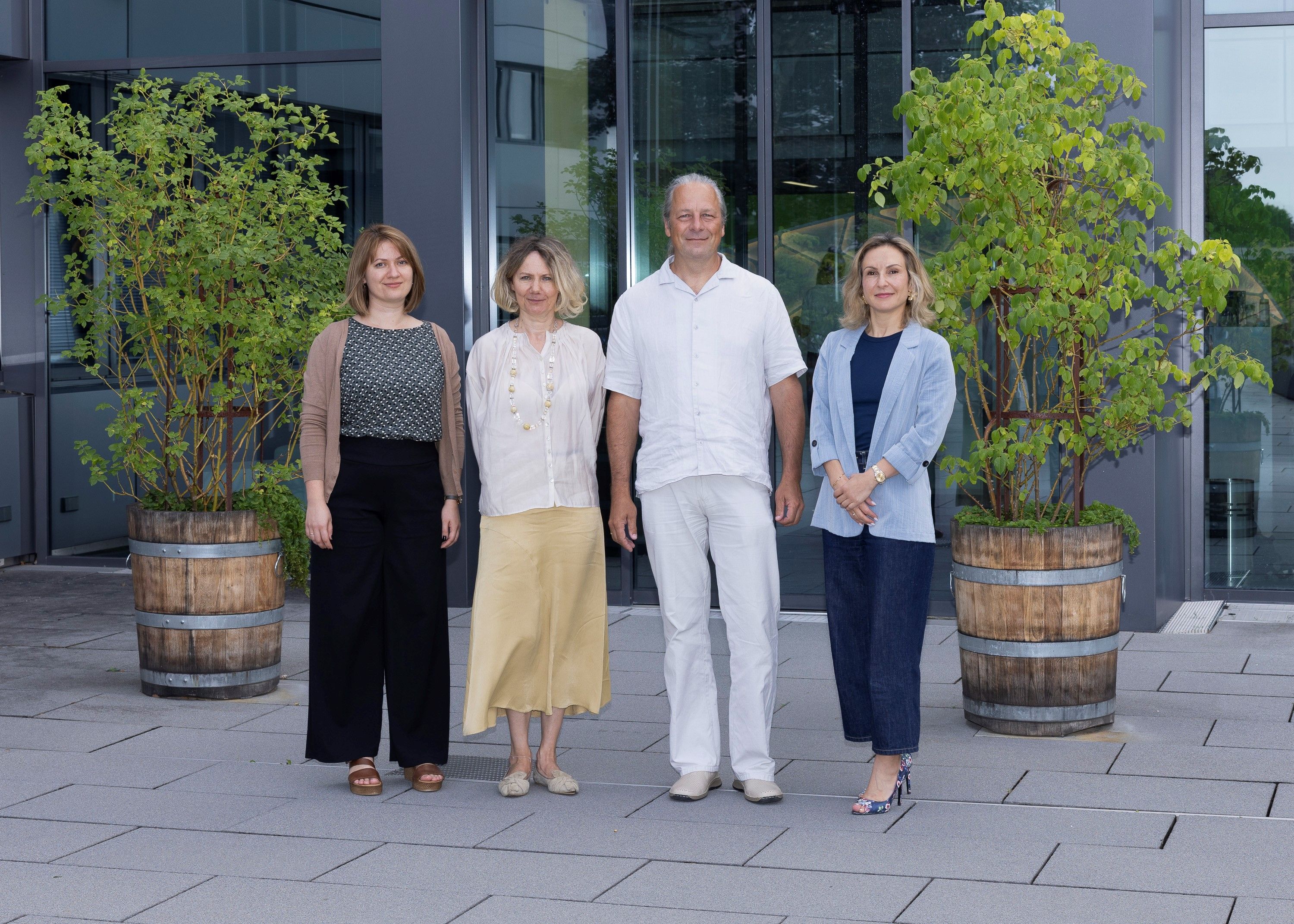
At Vilnius University Life Sciences Center (VU LSC), a new Competence Center is being established – one of the most ambitious recent research infrastructure projects in Lithuania. Its goal is to create a Gene Technologies Center that will open new opportunities for both scientists and businesses.
To prepare for this stage, representatives of VU LSC visited the European Molecular Biology Laboratory (EMBL) and Heidelberg University, where they learned about the management principles and best practices of centralized service and equipment laboratories (core facilities) that have been successfully operating for over two decades. The knowledge gained will help avoid costly mistakes and ensure that the new center in Lithuania is designed to meet the real needs of both science and industry.
EMBL is one of the world’s leading biomedical research institutions. Its experience in developing and managing centralized services and equipment laboratories has become a benchmark for many European research centers. As a member state of EMBL, Lithuania’s scientists have access to cutting-edge biomedical infrastructure and collaborative networks that foster innovation and knowledge exchange. The visit was initiated by Prof. Vytautė Starkuvienė-Erfle, VU LSC researcher and national delegate for Lithuania’s EMBL membership, with the aim of gaining first-hand insight into the operational models, management structures, and practical solutions of long-established core facilities.
According to VU LSC representatives, one of the key lessons from the visit was the realization that even the most advanced equipment does not guarantee its use – researchers must be continuously engaged, their needs analyzed, and services planned based on real data. Another important takeaway was financial sustainability: such centers rarely operate solely from service revenue, so long-term strategic planning – covering budgets and human resources – is essential.
In a conversation with Julius Gagilas, Deputy Director for Business Cooperation and Infrastructure at VU LSC, he shared insights about the visit, lessons learned from international experience, and Lithuania’s scientific strengths.
What stood out most during the visit?
One particularly interesting aspect was the assessment of user needs. Initially, our German colleagues assumed that once they acquired modern equipment, both industry and other research institutions would automatically start using it. However, EMBL’s experience showed that this is not the case – there’s a difference between what can be offered and what researchers actually need.
Today, EMBL plans its equipment and services based on regular user surveys rather than solely on researchers’ internal demands. In the early stages, they faced disappointment that some instruments were underused. Over time, after implementing structured service planning and feedback processes, the situation improved significantly. We may experience something similar in Lithuania.
What about financial expectations?
Sometimes it is expected that competence centers will be self-sustaining through service provision. However, in Germany, we heard realistic examples – the number of external orders is often insufficient to cover all costs. Budget planning must therefore include maintenance and personnel expenses, requiring strategic decisions to make equipment productive and encourage researchers to use the facilities.
What laboratories are being planned?
Eight laboratories are envisaged: sequencing and bioinformatics, flow cytometry, microscopy and imaging, eukaryotic (animal) cell engineering, microbiology, bioengineering, mass spectrometry, and continuous-flow synthesis.
Together with the multidisciplinary expertise of the research staff, these laboratories will form the Life Sciences Competence Center for Gene Technologies, named TRACEGET (Translational Center for Gene Technologies). The center is being developed under the project “Implementation of Mission-Based Science and Innovation Programs” within the Smart Specialization priority “Innovation for Health.” TRACEGET will serve as a platform where biotechnology startups and researchers can develop products faster and more efficiently.
The project is expected to be completed by mid-2026, and the competence center will be located in the newly built Faculty of Chemistry and Geosciences building at Vilnius University.
How does the center promote collaboration between science and business?
We provide centralized infrastructure – as mentioned, centralized service and equipment laboratories. These are equipped with modern, high-end instruments suitable for advanced research, and staffed by skilled specialists trained to operate them and deliver services efficiently.
Imagine you work at a small company and need to perform a complex analysis. Should you purchase expensive equipment yourself? Buying and maintaining it is costly – it’s far more practical to purchase a high-quality service provided through a centralized system.
It’s like needing to travel from Vilnius to Kaunas but not owning a car. You could buy one, but it’s expensive; instead, you can rent or use public transport and reach your destination comfortably. The same logic applies to a competence center – shared infrastructure enables access to resources efficiently and cost-effectively.
To ensure quality, instruments must be well-maintained, and systems for booking and accounting must be in place. We are working to implement these systems to make processes simple and efficient.
What are the main challenges?
The key challenges are establishing an effective management structure, ensuring sustainable funding, maintaining service quality, and attracting highly qualified experts. This work differs from traditional research – it demands a strong understanding of technology and service operation.
Given the competence and professionalism of VU LSC staff, I am confident that the center’s services will be in demand not only in Lithuania but also in neighboring countries.
What are Lithuania’s scientific strengths?
Lithuanian biotechnology, celebrating its 50th anniversary, is a true national achievement. We have an excellent foundation for training high-level specialists, particularly at VU LSC, and internationally recognized researchers whose expertise gives rise to successful startups and growing companies.
We hope that competence centers like TRACEGET will enable fast, high-quality services for both Lithuania and the wider region.
How important is science communication in this process?
Science communication is improving significantly. There are more communication professionals, and society is increasingly aware of the value of science and research. Establishing a competence center also requires clear communication – conveying goals and vision, engaging stakeholders, building trust, and coordinating decisions effectively.
By keeping the academic community and business partners informed early on, we can plan cooperation efficiently and ensure a successful start from day one.
We are already taking steps in this direction – preparing the service portfolio, developing website content, and participating in exhibitions and other events to spread the word among potential partners.
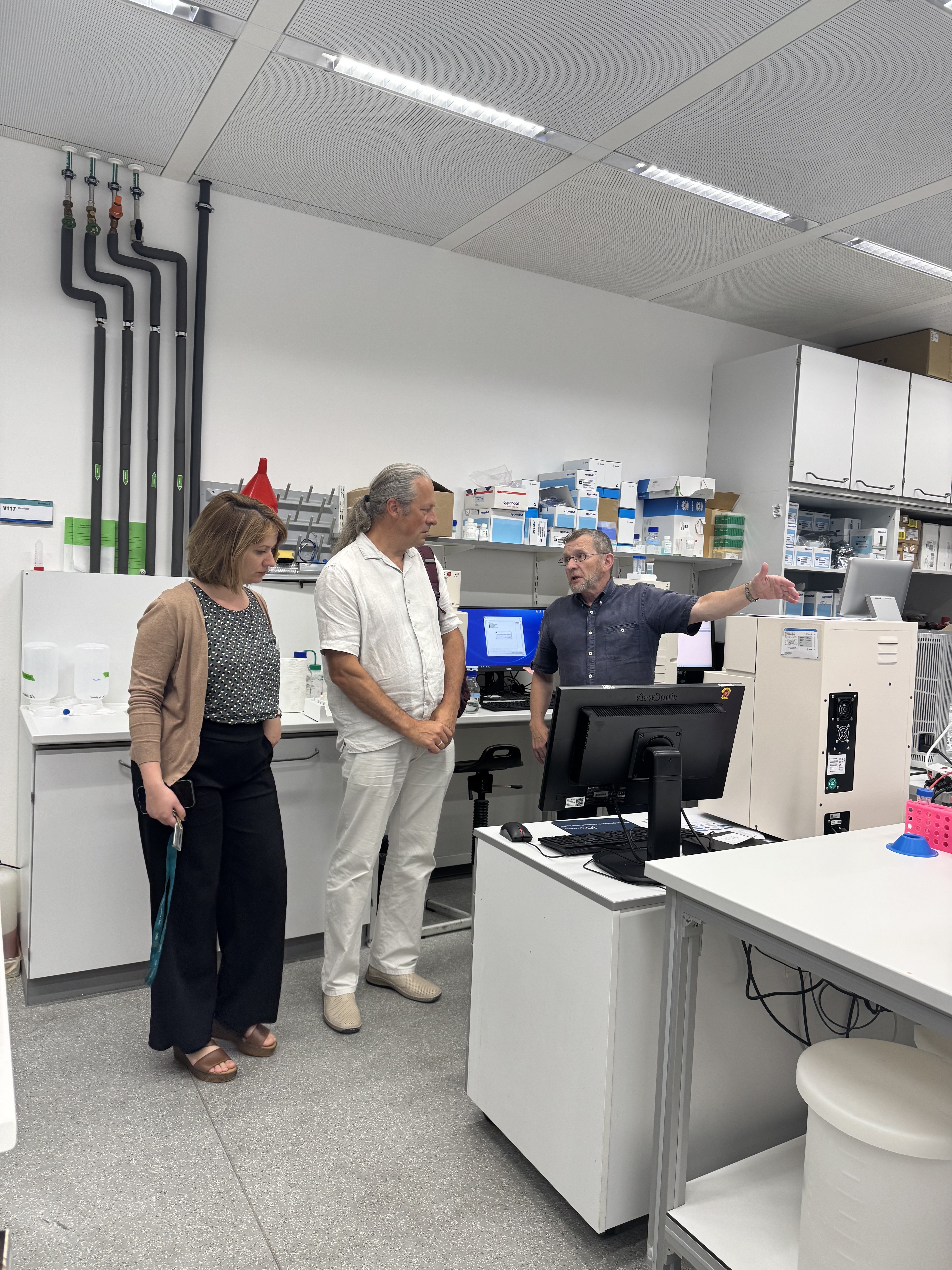 |
| Julius Gagilas and representatives from EMBL. Photo from a personal archive. |