


A study carried out by researchers at Vilnius University’s Life Sciences Center (LSC) has received international recognition – their publication appeared in the prestigious journal ACS Sensors, and an illustration created on the basis of the research was featured on the journal’s cover.
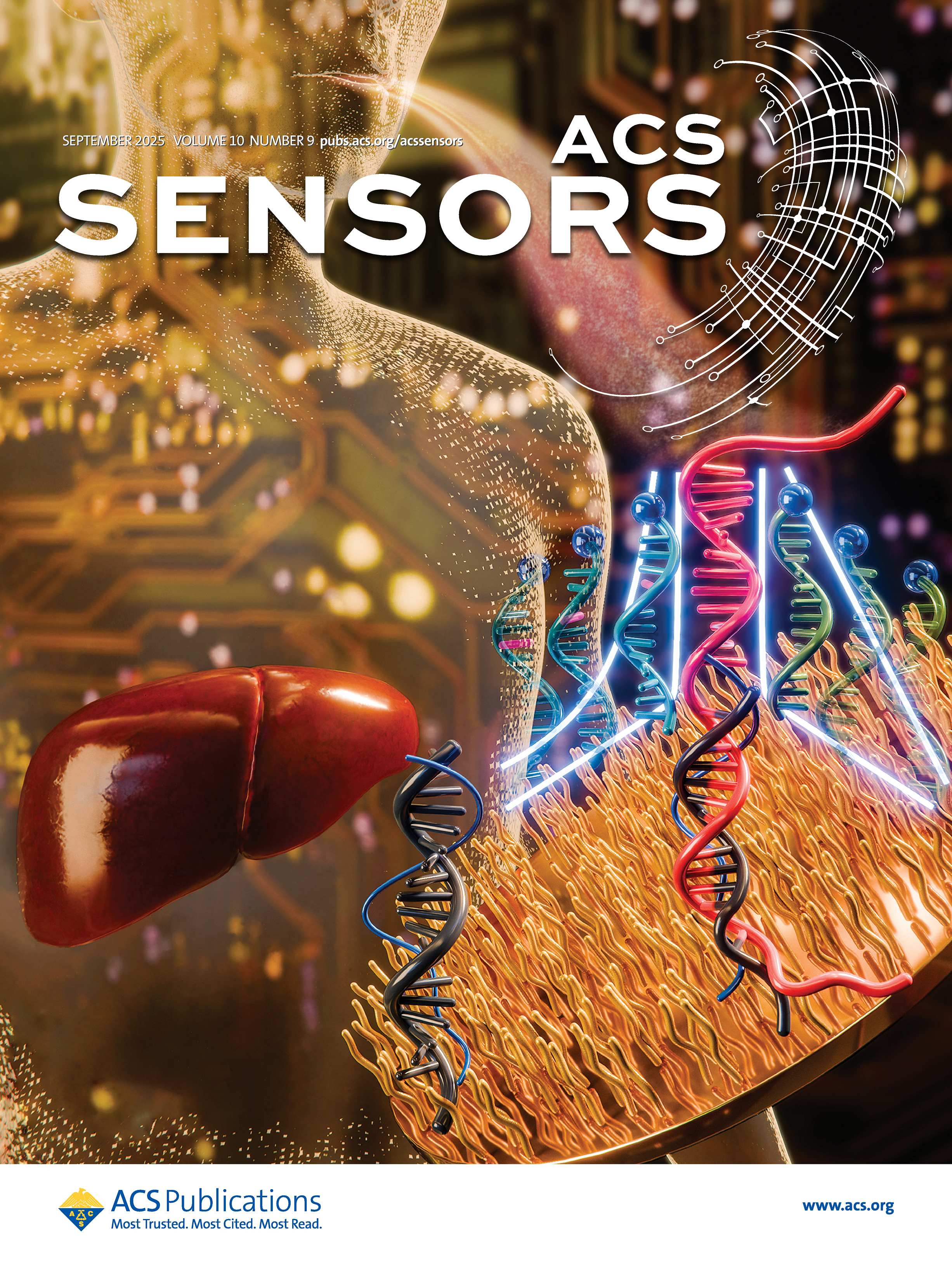
The scientists developed electrochemical biosensors capable of reliably detecting single nucleotide polymorphisms (SNPs) directly from human saliva samples. SNPs are small but highly significant genetic variations that can determine individual differences between people: susceptibility to diseases, drug effectiveness, or side effects. Until now, the identification of such variations relied on complex laboratory methods. Therefore, the LSC researchers aimed to create a technology that would enable this type of analysis to be performed quickly, cost-effectively, and conveniently in clinical practice.
“The idea to develop DNA sensors at the LSC arose because it brings together two areas I find particularly fascinating – fundamental studies of electron transfer between DNA and surfaces, and their application to the genotyping of real samples,” says Dr. Dalius Ratautas, a researcher at the Institute of Biochemistry (BChi) and the project leader. Together with his colleagues, he initiated a project funded by the Research Council of Lithuania through its researcher-initiated projects program. The goal was to create electrochemical biosensors capable of discriminating short DNA sequences containing one or several SNPs.
In today’s international scientific arena, demonstrating sensor performance solely in model solutions of target sequences is no longer sufficient – real samples, as close as possible to practical applications, must be tested. In this case, the team focused on the CYP2C19 pharmacogene, which is associated with altered drug metabolism. The study examined two variants: CYP2C19 (wild-type) and CYP2C19*17 (gain of function). Each of us carries the CYP2C19 oxidase and its gene, and identifying SNPs in this gene is clinically important – such analysis is already recommended in the latest cardiology guidelines.
While pursuing the project, the BChi team faced challenges in analyzing CYP2C19 from real saliva samples. Here, support came from the Institute of Biotechnology (BTI) team. Together, they developed a genomic DNA preparation protocol: the saliva sample is amplified by asymmetric PCR and, without additional purification, incubated with the electrochemical SNP sensor. Within 60 minutes, the system can statistically reliably determine the genetic material type, distinguishing among three possible diplotypes – homozygous wild-type, heterozygous, and homozygous SNP.
“I am glad that we combined very different scientific competencies to achieve a common goal – taking a small step toward bringing personalized medicine closer to daily practice,” says Dr. Miglė Tomkuvienė, a researcher at the BTI Department of DNA Modifications Research.
BChi doctoral student and first author of the article, Skomantas Serapinas, further elaborates on the significance of this research:
Why is such a sensor needed?
Pharmacogenetic sensors help make decisions related to human health: choosing the right medications, optimizing dosages, and making changes if necessary. Let’s not forget that every person is different – pharmacogenetic studies reveal those differences and allow them to be taken into account.
How does your sensor work?
The sensor uses genetic material obtained from an amplified human saliva sample. At a constant temperature, it measures the affinity of the target DNA sequence against a known DNA probe. Changes in affinity cause electrochemical signal changes, which we measure. As a result, the sensor can reliably detect point mutations.
How is it better than current genotyping methods?
As is fashionable nowadays – we want to “democratize” SNP-oriented analysis – to make a genetic sensor that is miniaturized, inexpensive, simple, and portable. I believe that giving patients and doctors the ability to quickly and noninvasively obtain easy-to-interpret results could be an important step in applying pharmacogenetic measurements.
How much harder is it to analyze a real sample compared to a model one?
Once we started working with real samples, we encountered problems – the DNA length after PCR was not what we wanted, so we had to optimize the sensors to work with longer sequences. Another problem is that real samples are double-stranded, making hybridization harder. And, of course, the samples themselves often don’t contain enough DNA, so amplification is needed. With the BTI team, we put a lot of effort into obtaining high-quality, unpurified amplified DNA samples that reflect real-world analysis conditions.
What does an ACS Sensors cover publication mean to you personally?
I am grateful to the entire team who contributed and supported me along the way. It is major international recognition of our research that we are moving in the right direction. For me personally, a symbolic milestone as I complete my doctoral studies.
What are your next plans?
The next step is to integrate isothermal DNA amplification and then move toward prototyping a true point-of-care analyzer.
Article reference: S. Serapinas, D. Stakelytė, K. Tučinskytė, M. Tomkuvienė, M. Dagys, D. Ratautas. ACS Sensors 2025, 10, 6819–6827. https://doi.org/10.1021/acssensors.5c01577
Funding: This research was funded by Research Council of Lithuania (No. S-MIP-23-127)
Have question or want to collaborate? Contact S. Serapinas () or D. Ratautas ().