

The exhibition “Exploring and Creating: When Science Becomes Art”, which unites scientific discoveries and the artistic interpretations of young creators, is moving from Vilnius to Lithuania’s regions. Its first stop is STEAM Panevėžys, where students will have the opportunity to take a closer look at the invisible world of life.
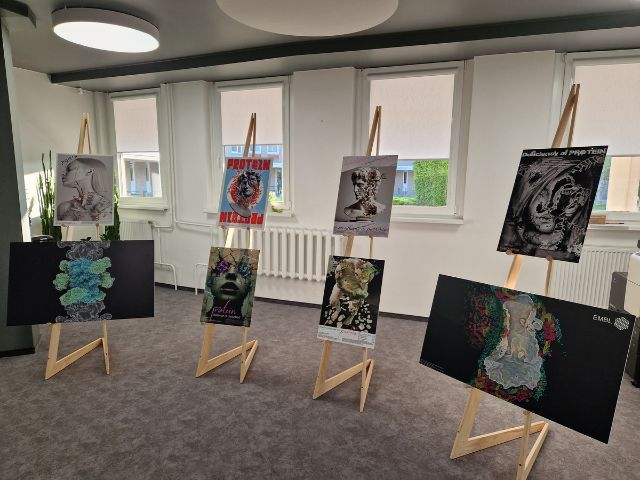
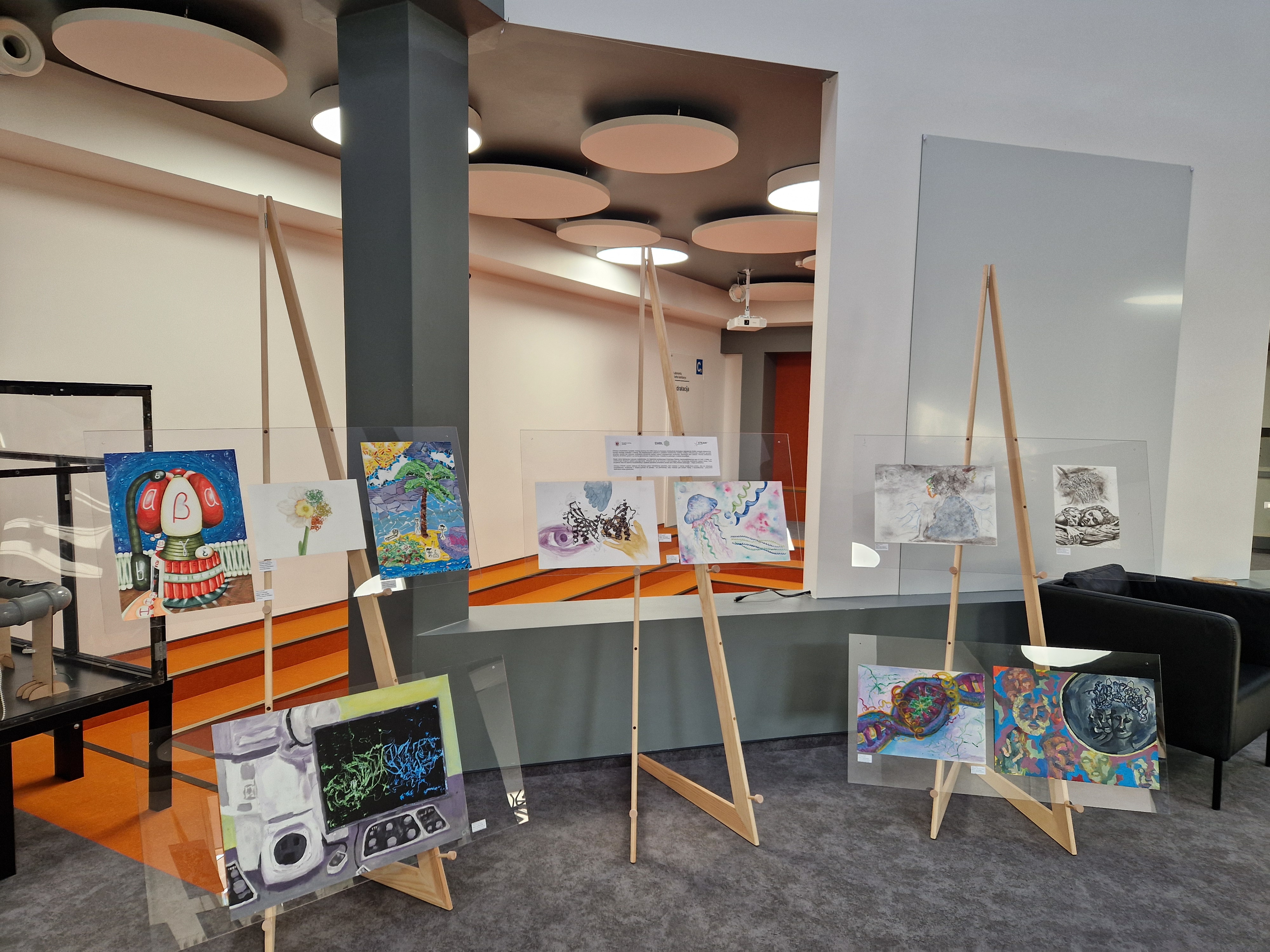
The exhibition offers visitors two unique narratives. The first part presents high-resolution microscopy images by EMBL and VU LSC scientists. These are not only scientific data but also visually striking works that resemble abstract art. They reveal the subtlety of cells, organelles, viruses, and other life processes. The second part showcases artworks by Lithuanian school students, created for the international EMBL contest “Fold Your World”. Drawing inspiration from protein structures, young artists sought creative ways to convey the beauty and significance of these molecules.
The exhibition is a joint project of the Vilnius University Life Sciences Center (VU LSC) and the European Molecular Biology Laboratory (EMBL), dedicated to marking two important anniversaries – the 5th anniversary of Lithuania’s EMBL membership and EMBL’s 50th anniversary.
According to one of Lithuania’s most prominent scientists, VU Distinguished Professor Virginijus Šikšnys, the collaboration between VU LSC and EMBL is a major step forward in educating the younger generation:
“Science is not only about research and technology, but also about inspiration that allows us to think differently. Projects like this not only foster creativity but also help young people discover their place in the world of science,” says the professor.
VU STEAM Center Head Dr. Paulius Lukas Tamošiūnas emphasizes that such initiatives play a vital role in educating the young generation:
“Science and art have always been connected. Both require creativity, curiosity, and the courage to explore. This exhibition is an invitation not only to see how science inspires art but also to reflect on how creativity can enrich our lives,” he notes.
Dr. Tamošiūnas adds that the works displayed in the exhibition not only spark an interest in science but also foster key competencies – creativity, critical thinking, and problem-solving:
“Science opens up new opportunities for young people to understand the world, while art allows them to see those opportunities in a different light,” he says.
The journey of this exhibition through Lithuania’s STEAM centers is not only a chance for students to explore life sciences but also an invitation to build a connection between science and art, to cultivate curiosity, critical thinking, and creativity.
Exhibition partners: Vilnius University, EMBL, STEAM centers, Energy and Technology Museum.
Supported by: Thermo Fisher Scientific, Linea Libera, Future Biomedicine Fund.
 |
 |