

Why analyze amino acids?
Most of us know common blood markers such as CRP, glucose, or creatinine. Far less well-known is the diagnostic analysis of amino acids. The human body uses 20 essential amino acids for protein synthesis, and their changes have been linked to muscle conditions, dyslipidemia, diabetes, heart failure, and pregnancy complications. For example, a study of 100,000 people showed that branched-chain amino acids are strongly associated with muscle mass and strength, making them potential biomarkers for sarcopenia.
However, amino acids are rarely studied – their analysis requires special equipment, skilled personnel, and lengthy sample preparation. Due to the limited number of studies, the clinical value of amino acids is still not sufficiently proven. This creates a closed cycle. Few studies lead to an unknown value, and an unknown value leads to few studies. Such cycles are typical in translational research and are usually only broken after large-scale clinical trials with tens of thousands of patients. A fast and straightforward method for measuring amino acids could break this cycle and open new opportunities for diagnostics and therapy.
From the laboratory to intensive care
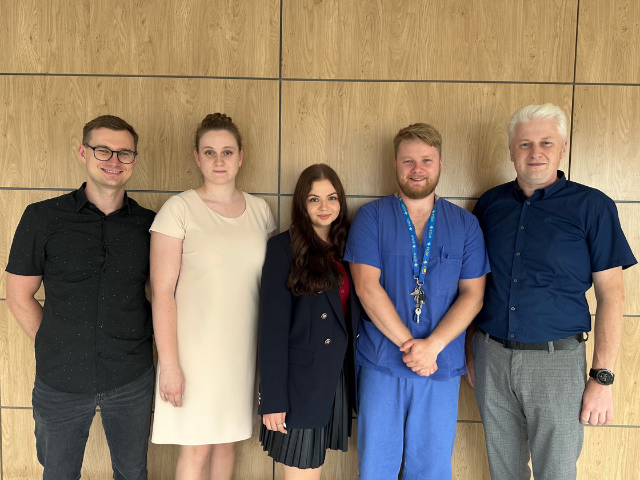
“The idea to create and adapt biosensors for measuring amino acids arose in discussions with doctors, while the possibility for implementation occurred when we received funding from the Lithuanian Research Council (LMT) as part of the SMART program,” explains project principal investigator Dr. Dalius Ratautas. “This allowed us to combine the scientific expertise of our Bioanalysis Department with the clinical practice of the doctors at Santaros Klinikos,” adds department head Dr. Marius Dagys. The biosensor team developed electrochemical sensors for L-amino acids, while doctors organized a clinical study and sample collection that linked clinical data and patient outcomes with the analysis of the amino acids.
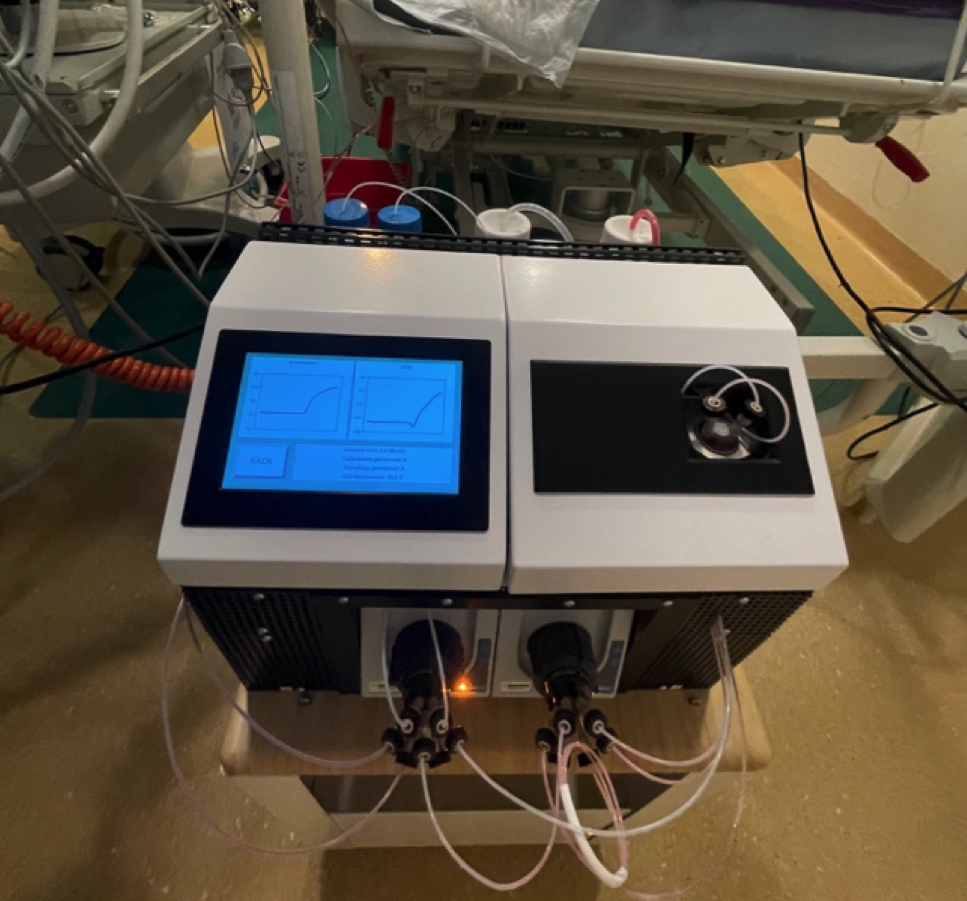
After completing the project, much technical work remained to design a functional prototype. This led to a second project under the LMT Technology Development Program, where Vilnius University, together with SensoLife (UAB “Bioanalizės sistemos”), created an automated device that connects directly to a hemodialysis line, capable of automatic sampling, calibration, and cleaning. Considerable engineering challenges arose, such as integrating two biosensors (for amino acids and urea) into a single system. The device was later tested at Santaros Klinikos. “Accessible analysis of amino acids will open new diagnostic possibilities. We will be able to see how changes reflect treatment adjustments and patient condition, and in the future use this technology to achieve better treatment outcomes,” comments Vaidas Vicka, anesthesiologist-reanimatologist at Santaros Klinikos. This project was recognized as the best applied research work at Vilnius University in 2024.
From the laboratory to space
The application of technology goes beyond hospitals – in fact, beyond the Earth itself. “Measuring amino acids can be important for monitoring the health of astronauts, as muscles undergo major changes due to the loss of muscle mass,” says Dr. Ratautas. Continuous amino acid measurements on board a space station could provide meaningful answers. The technology developed by the team has been funded by the European Space Agency (ESA) for further advancement of research in the field of space medicine. Together with ESA, the system is being adapted for space, making it portable, buffer- and dilution-free, and suitable for use by non-laboratory specialists. Technology is now advanced enough to measure amino acids directly from human serum without needing a laboratory. The team has just published their results in Biosensors & Bioelectronics – the world’s leading journal in analytical chemistry. The first authors, Life Science Center (LSC) students Deimantė Stakelytė (PhD student) and Estera Pelenytė (MSc student), emphasize that this technology and the publication highlight the high level of science and education at the LSC, and the ability of the young researchers to develop internationally recognized solutions.
What’s next?
The journey of amino acid biosensors has only just begun. The first prototypes have shown that monitoring
amino acids is feasible both in the clinic and
space. The next step is to turn these prototypes into widely accessible diagnostic tools. This will require overcoming technical, manufacturing, regulatory, and business challenges. However, the vision is clear: the same biosensors that can help patients in intensive care units could one day protect astronauts' muscles on missions to Mars.
Results published in:
Deimantė Stakelytė, Estera Pelenytė, Marius Butkevičius, Marius Dagys, Sandra Ortega Ugalde, Dalius Ratautas, “The Aminometer – a Finger-Sized Prototype for Total L-Amino Acid Measurements from Human Serum”, Biosensors & Bioelectronics 2025, https://doi.org/10.1016/j.bios.2025.117926
Funding:
Research Council of Lithuania (No. S-TPP-23-3) and European Space Agency (4000145870/24/NL/EH).
Questions or interested in collaboration?
Contact Dr. Dalius Ratautas ()
 |
 |
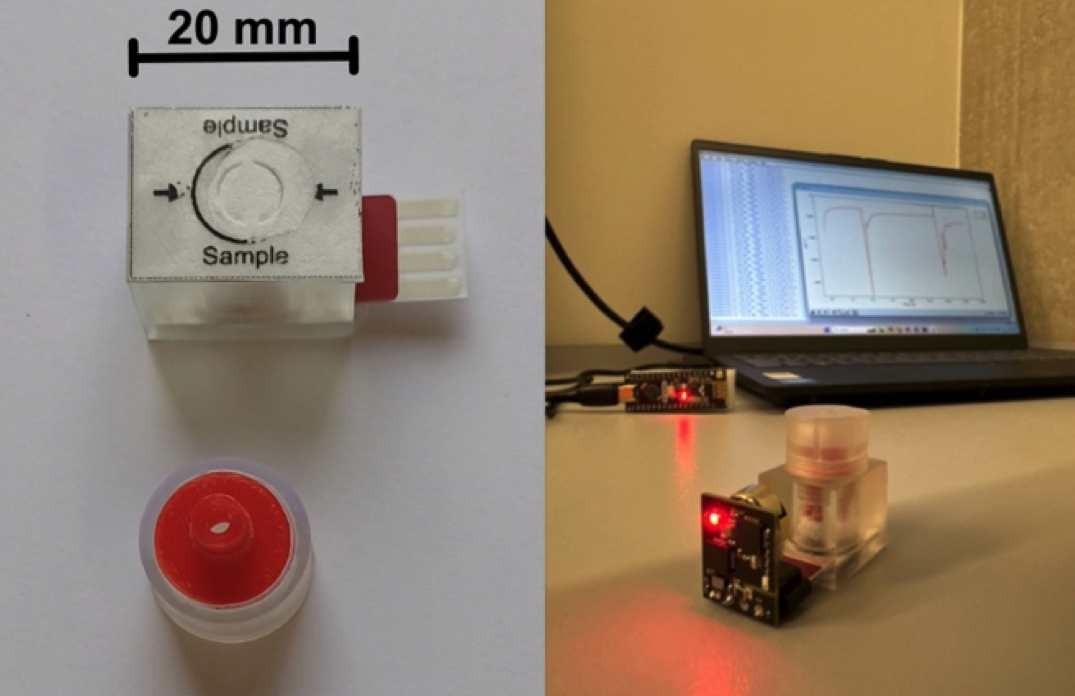 |
| A team of VU LSC scientists and Santaros Clinics doctors | The device is connected to the hemodialysis line | The prototype is designed for amino acid measurement in space |